How Are You?

“How are you?” he asked in Arabic, his native tongue.

“Busy,” I relied with a quick smile.

“No,” he said. “I didn’t ask you what you are. I asked you ‘How is yourself.’ I want to know how is your internal self, your condition, your state of being. ‘Keif halik?’”

It occurred to me at that point that I was so used to the vagueness that surrounded this simple question (How are you?), and the ease with which it rolled off the tongue, it had become habitual for the one asking and the one answering to hide one’s self in its vagueness.

How are you? Three little words and a question mark. It’s a question we use all the time when we run into someone in the grocery store, in the office, in hallways, at social gatherings, in meetings etc. The question hangs in the air, waiting, but not really. We often ask without expecting much of an answer just like at the grocery store where the cashier asks “Did you find everything you needed?” without looking up and expecting none other than a positive “Yes”. But what are we really asking? Are we really asking because we want to know or are we asking out of trained politeness? Do we really care what the other person says? Do we actually expect them to answer the question? Do we expect them to answer truthfully or give the standard, “Busy,” or “Fine” or “Good! How’re you?” A quick nod and a smile, and then we each go our respective ways.

“How are you?” has become a ritualized greeting; just another way of saying “hello.” And because we live in an age where there is such stigma attached to failure and misfortune, we have to appear to be happy on cue. We are trained to put on a happy face, to answer with “great,” “busy,” or “you know, the usual,” regardless of how much pain or struggling we are going through. We have to remove that stigma so that those struggling, whether they are famous or not, are able to come forward when they are in a dark place, without fear that it will ruin their career or paint them as someone who is broken, crazy and just not trying hard enough.

But how did it all start for us to not answer truthfully? And is it the same in all cultures? I’m not quite sure it’s only an American optimism that easily embraces the automatic “fine.” The Armenians answer with “vochinch,” meaning “nothing,” or “neither good nor bad,” which is probably a remnant of years of Russian oppression when wretchedness was impermissible. Even Shakespeare, as far back as 1604, revealed the reluctance of his hero Othello to answer the question truthfully. Desdemona asks her husband, “How is’t with you, my lord?” and Othello replies “Well, my good lady.”… Even though he is half-mad with jealousy and only a few scenes away from murdering her.

Many of us are private and reluctant to tell others about the issues that disturb us. Even when we go to the doctor, we often minimize or fail to mention problems we are having. But why? Are we afraid to be helped? Are we afraid to admit that we have problems or do we have a lack of trust in old friends and new ones believing that no one really cares about what we say? The truth is that with an ever growing sense of depersonalization, we will never really know what’s going on in someone’s life behind his or her front of ‘happiness’ unless we are truly willing to listen to the response that goes into the depths of their state, their self.

He asked again, “Keif Halik?”

Asking questions isn’t only about the asking; it’s as much about listening and absorbing what the other person is telling you. He didn’t walk by with just a wave. He stopped to hear the answer. He listened to the tone of my voice and acknowledged my state of being. He was mindful. He was authentic. Plainspoken. Genuine.

It was my turn to give value to the question.

We talked.

Posted in life | Tagged | 4 Comments

Lady Liberty

statue-of-liberty-new-york-usa-travel-critic
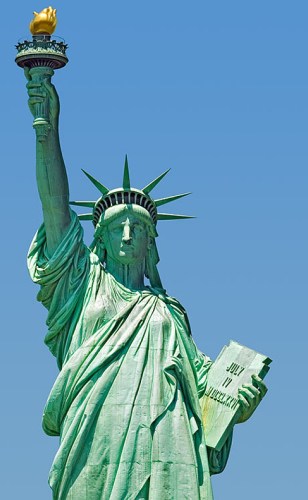
As the plane left La Guardia airport, it circled around the familiar robed woman wearing a crown of seven spikes. She holds a torch above her head with her right hand. In her left hand she carries a tablet. A broken chain lies at her feet. She is an icon of freedom and of the United States….a welcoming sight for those arriving from abroad and seeking refuge.

I thought back to 43 years ago when, as a young girl, I landed in New York on a temporary visa, frightened yet anxious to carve out a new life. The voices of thousands of women, children and men who had come before me on boats (or planes) followed me through my journey while their courage challenged me and their dignity reminded me that citizenship is not found in a piece of paper. It is found in the integrity of character.
Somehow, today in America, we are being led falsely to assume that those who differ from our norms are wrong. That those who come from countries less fortunate are not welcome. Yet it is people from diverse roots who have come here as dreamers who mirror the spirit of tolerance, kinship, and nationalism. People like you and me who celebrate the values, traditions and history of our ancestry while embodying the values of the American way of life.
As Americans we have to do better than trying to demonstrate our strength internationally by antagonizing peace talks, competing in nuclear explosive powers, selling weapons of war, associating with tyrants, and being oblivious to environmental issues. To demonstrate our worth and strength, it is our obligation now more than ever to infuse the moral and ethical values of this great nation into the processes of governing. Because without morality we will soon lose our influence around the world. I firmly believe that as a nation we can be humble instead of arrogant and flagrant. As a nation we can assist others without the need to dominate. As a nation we know to feed the hungry and deprived because we have nurtured our way out of the depths of our own starvations. As a nation we can be rooted in sensitivity, and show an understanding of life that is filled with compassion, kindness, and a deep concern for all refugees and immigrants seeking the same freedoms we have. As a nation that sees innocence before guilt and dignity before lowliness we can be strong and influential by clinging to principles that form the foundation on which our lives are fashioned.
Events and comments that smear and harm the press remind me that these are usually the first freedoms to be attacked by oppressors and dictators. Events and comments that misconstrue our understanding of freedom of speech and divide us remind me of irrational prejudice and discrimination that stem from a lack of respect for human rights for all humans.
Our Lady of Liberty that welcomes all into her harbor makes no boast of color, race, religion or class. On the contrary, she accepts each of us into this country, as a displaced person. I came from abroad, as did thousands before and after me. There is not one person living in this great nation (except for the Native American, also displaced in this their homeland) who is not a descendant of a displaced person. I am the reclaimed remains of another land, and today I am an American of a proud nation. I may not look like a “real” American, but there actually is no guide as to what a real American should look like. Americans are made up of so many different races and ethnicities, that the American culture or identity would not be what it is today without all these different derivations. The common denominator is our hunger for freedom. Whether we came here driven by economic, political, or religious oppression, or to successfully start anew, we did so believing in the fundamental certainty of our human rights and in the upheld dignity of man.
At the airport, I wondered, could America have become who she is now if the founding fathers had used the concept of building walls that divide and separate instead of a system of government that places a person’s inalienable right to be free from coercion at the center of its concerns? I wondered.
On the 4th of July, I hope we can all turn to the deeper symbolism of this celebration. As you hold your flags up high, remember the true meaning of America which lies in the soul of all those yearning for freedom… engraved at the base of our Lady Liberty on Bedloe’s Island in New York Harbor:
“Give me your tired, your poor, your huddled masses yearning to breathe free, the wretched refuse of your teeming shore. Send these, the homeless tempest-tossed to me. I lift my lamp beside the golden door!”

Posted in kindness | Tagged , , , , , | 6 Comments

Measure of a Man

To fathers who love, who pray, who shed a tear
As they lay down their lives, in the big ways
And sometimes the harder small ways, for our families
At home, in our communities and across borders—
I salute you.
The measure of a man is not in your brute strength
But in the lessons we learned about hard work,
Faith, service, friendship, and respect for others taught by your example.
To fathers who sacrifice without self-pity, who defy stereotypes and who encourage us
To be faith driven and to look forward in life,
I salute you.
I salute you…
Because
The measure of a man is not the car in which he drives through life, but the size of the hole left behind when he leaves it.

Happy Father’s Day to dads on earth and in our hearts.

Posted in family, Uncategorized | Tagged , , | 1 Comment

Silence Is Never Really Silent


I ask, “Where shall we go for dinner?” while my husband searches for a favorite bottle of wine from the wine cooler. But the question is only a formality. We each know we will choose the usual restaurant a mile down the street from our home. We’ve been there before…many times. We like the food, the noisy clientele, the atmosphere. We take the short drive to the restaurant overflowing with early diners engaged in loud conversation. We catch the eye of the bartender and immediately find two seats at the bar. It has become a ritual. He asks if he should open the bottle for us. Yes, of course. He hands us the menu knowing full well that we don’t need it. But I read it from appetizers all the way through the desserts listed, just for fun. I choose the same thing as always. My husband opts for his traditional choice of platter which we both share. We toast to gratitude as we take our first sip of wine. We nod in approval. The vineyard and vintage has been tried and tested by our palates over the years. It is full bodied, with a spicy bouquet and rich in tears that cling to the side of the glass. It is hearty and intense, with a finish that is dry yet smooth, all at once. The first glass of wine goes down quickly among talk of work and events that transpire through the day. My husband pours more wine into the glasses. The conversation shifts from our individual day to a song I heard on the radio. We talk of nostalgia, of past and present. We talk of our children and families. We talk of science, life on other planets and the future of humanity. We discuss the struggle between science and religion. Do people realize the presence of God in the lives they lead? We talk of miracles. We talk of faith. We talk of love. We talk. And then, we pause. We know the deeply felt significance of the unspoken. We understand its profound power. We sit in silence. It’s the way it has always been for the past 42 years.

Forty two years ago we met in college. There were no expectations or pressure to become someone other than who we were. We came together and it just fit. There was a sense of physical and emotional intensity – heart pounding, eyes lighting up, dizzying skyrockets and roller coaster rides – drawing strength from each other. We spent hours over a cup of coffee which turned into a glass of wine as we watched the moon take over from day into night. We talked of future, of values and families. Children to be born, challenges to overcome and ladders to climb. And though we were young we were not as reticent as wine that holds back its bouquet. We quickly discovered that allowing a pause, an aeration if you will, would round out and soften any conversation like wine that is allowed to breathe. In such pauses, we felt the power and persuasion of silence. There was such authority in those moments that the act of saying nothing spoke louder than words ever could.

Now that I’m married I consider each day what it takes to stay married and in love for 42 years. I may not have the extravagant spontaneity of last-minute weekend trips or witty conversation over champagne brunches. I believe more in the sacred of the ordinary. I believe in love that is sustained by deliberate silence and the choice to see the profundity of the silence as testaments of love and commitment rather than indicators of a spark that has died—of love communicated each time we sit at a meal together, of loud, full bodied conversations that add spice to the thoughts; sometimes rich in tears of joy or sorrow. They are hearty; they are intense with a finish that is smooth. This picture of love is decidedly real, and in its own way more romantic because of the bold weight of its reality.

I trust silence. I trust its longing for wholeness, its desire to close the breach, its passion to unite what is out of reach. Think of silence in music, the pause—that empty moment, the “rest” that connects what came before and what is to come. Consider the pause that gives poetry its rhythm, or the pause in speech that throws you into the depth of what is to come next. A moment of awareness of the present, with a nod to the past and an ear turned to the future. So too, our lives need silence—amid the bright and tangy blend of vineyards that soften the intensity of ripened nuances—the predictable eloquence of pregnant pauses shakes us to our core. It feels like home without any rationale; the love that is like a storm and like the quiet calm of the night after.

Once again we raise our glasses. In the small silences of our predictable day, I choose him, and I choose love, all over again.

“Silence is never really silent.” (John Cage, composer)


Posted in Love | Tagged , , , , | 14 Comments

Mayr Im, Mother

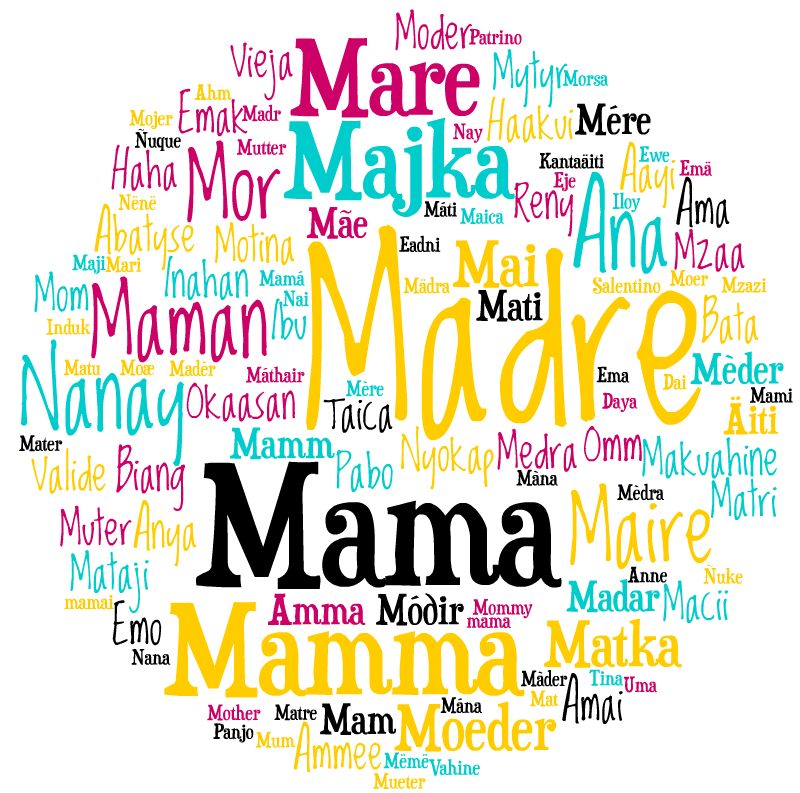
   To all mothers who have left the light on with their unconditional love, this day belongs to you. Mother’s Day is a word that reminds us of hope, of life, of stability and belonging, of creation and procreation, symbolized by and encompassed in the word Mother. Mother earth, Mother Nature, motherland, mother church, mother tongue, mother ship, mother board, mother of all inventions, mother of all living things…mother. Women are the keepers of the balance of humanity, the conscience of nations, the flame that lights the hearth of countries, and rise up the next generations.

To the women who lead and to those who follow. To the women who teach and to those who learn. To women young, middle or aged, with or without child, working at home or out of the home, married, single or divorced, with money or without, who use their strength and their powers to become mothers of all living things, I salute you.

HAPPY MOTHER’S DAY.

Posted in empowerment, mother, Uncategorized | Tagged , , , , , | Leave a comment

Victors Write History

Triumphant victors write history. And more often than not the triumphant are the more powerful past– the male. But just as history contains many times and many truths, it also contains many people—half of them women. The recent “velvet revolution” in Armenia, regardless of its final outcome, is one which will be written by her equally triumphant victor – the female.

Women’s involvement in the creation and reformation of democratic societies from past to present day has been essential to the peaceful process of change.

As I contemplate the role of women in social, cultural, and economic history, I realize ways in which the field of change has slowly evolved. Over the periods of different historical movements, women reformers directed their activities into areas, which were merely an extension of their domestic and traditional roles. They taught school, cared for the young, the poor, the sick, and the aged. They tended to the home. They conducted their lives according to a value system indoctrinated and defined by male dominated society. As their awareness expanded, they began to turn their attention toward the needs of others, namely women. They began to take a stand for female higher education; they spoke of prostitution, of moderation, and organized women for abolition of slavery. But it wasn’t until much later that their awareness grew to recognize the need to raise their subordinate place in society. Perhaps it was the restrains of their male counterparts and the oppressive “rule” of patriarchal society that gave way to the women’s rights struggle and the winning of suffrage and the institutional and organizational history of women’s movements. Whatever the cause, a movement becomes a revolution when someone feels the pain. And it is usually those who are subjected to subordination, who are marginalized, who are least able to bear it who hurt the most. It starts with one person. Eventually that single one person becomes two and three and then multiplies to become a large percentage of the populace. Soon, everyone begins to feel it, and the outrage of the people is loud enough to rock a nation.

I am reminded that it is the quality of great leaders and the ability to solve problems, that enable a people to live peacefully with faith and hope for their children and their grandchildren. Theirs is the desire to live in a fairer society, where citizens live with dignity and where nepotism and corruption do not lead to extremes of social income inequality and poverty. Per official statistics, over one third of Armenians live in poverty and the country’s population has declined below 3 million due to both emigration and a shrinking birth rate. After two decades of discontent and anger in a morally bankrupt kleptocracy, could the nation have held onto another year of the same? No!

I have the greatest respect and admiration for the women who stood in frontlines and next to and behind the people of a nation that felt the pain and the need to implement a more democratic and just system of governance; a system which recognizes and respects the rule of law and the human rights of Armenia’s citizens. People took to the streets and squares in Yerevan, Gyumri, Vanadzor, and smaller towns and villages throughout the country. There was kindness, tolerance and courtesy in their unwavering determination for change. More and more women, young people, and disabled people, became involved in the protests. I marveled at how their patriotism was manifest by each of their talents, gifts or abilities. Some took to the streets with their musical talent, others with their gift of dance, some with voices that rose as sweet as the Gregorian chants, while others who were disabled and served within their homes took to clanking pots and pans to participate in the rally to take action. This civil awakening of a nation systematically and smoothly proved that strength is in solidarity. The bravery of both women and men who courageously stood up to protect a nation’s survival is self-preservation at its best. It’s Patriotism.

Women activists have a history of not always being welcome in public offices and key decision-making forums. We have seen that all too often. But women are no longer the oppressed and vulnerable. Their actions and voices speak with and for an entire nation.

How will historians record this movement, this “velvet revolution”?Simply put, to overlook or minimize women’s role in the making of a robust, healthy, prosperous nation would be unpatriotic. We must all become triumphant victors…in a Nation of Equity.


Posted in justice, kindness | Tagged , , , , , , | 3 Comments

March to Protect History

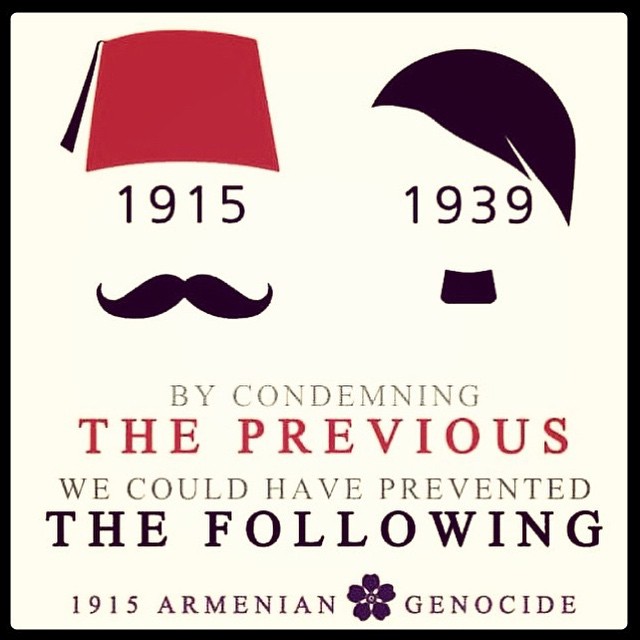
Today, Armenians commemorate those who lost their lives during the Genocide on April 24, the day in 1915 when several hundred Armenian intellectuals and professionals were arrested and executed as the start of the genocide. This was the prelude to the large-scale extermination of the Armenians in which 1.5 million Armenians died.

For Armenians throughout the world, this April 24 especially, will mark not only the continued determination of a people to seek retribution for injustices and atrocities intentionally inflicted by the Turks to eliminate the Armenians, but it will mark the civil awakening of a nation that smoothly, systematically proved yesterday that strength lies in solidarity. Disciplined and resolute, with unwavering determination and persistence, the people asked for change in the Republic of Armenia, and their voices were heard after 11 days of massive protests culminating in the resignation of Serge Sarkisian, Prime Minister. Armenia taught a lesson to many in the world…to democracies, hybrid regimes, and authoritarian states alike…. that a Peaceful Revolution, a Velvet Revolution, is powerful. The presence of tens of thousands of broad based support from different layers of society (truck drivers, shop keepers, farmers, educators, artists, physicians, the middle class, the richer, the poorer, the young, the old, etc.) proved the integrity and passion of the people of the Republic of Armenia and the Diaspora whose unified voices demanded a leadership in government that could be trusted to listen to the people.

With change comes further sacrifice. The road is long. There are many serious challenges– from socio economic to the regional challenges of peace deals with neighbors; from human rights violations that translate politics into policy; from corruption to transparency and trust in communication, to name a few. However, I have full confidence in the Armenian citizens and especially in the youth. They understand their moral obligation to speak out against the hierarchy status of power. They are educated and have the knowledge to methodically, step by step, build the institutions that will better serve the country and the Armenian people.

Yesterday, history was made. Today, we protect history. We march in thousands as one river of humanity, to speak out against the denialist mentality of the Turkish government and all governments who use their status of power to distort the truth of our history.   It is our moral obligation to speak out to honor the martyred ancestors of our history, and to advocate “Genocide, Never Again.” Together, as one, on this National Day of Remembrance of Man’s Inhumanity to Man,  we march for world recognition of  the Armenian Genocide. We march to protect our history.


Posted in humanity, justice | Tagged , , , , , | Leave a comment

Genocide…Never Again Failed

In March 2018, the Center for the Prevention of Genocide published a report that “Every day, Syrian men, women, and children are falling victim to the constant bombardment of their neighborhoods, schools, markets, and hospitals.” We read about it. We hear snippets of it in the news in between reports centered on the increasing abuse of power of our politicians toward the American people. We call these attacks genocide. (March 2016 Secretary of State John Kerry called these attacks genocide against Yazidis, Christians and other minorities in the region.) Syrians are being subjected to starvation, exposure, diseases, and lack of medical care; to enforced disappearances; to chemical weapons attacks—which are banned under international law—and to torture, rape, and killings. Half the country’s pre-war population (11 Million) have been killed or forced to leave their homes. The number of Syrian refugees is rapidly rising at over 5.5 million, and another 6.1 million are internally displaced.

Calling these attacks genocide is meaningless because this great nation, the United States of America, has failed to heed the lessons of the tragic history of the first genocide of the 20th century. I repeat what the Armenians have been saying for over one hundred years when the first genocide of the century occurred at the hands of Ottoman Turkey and which, to this day, has not been recognized as mass murder in genocide but which continues to be ignored and evaded—GENOCIDE AND ETHNIC CLEANSING CONTINUE IF THE RESPONSIBLE PERPETRATOR IS NOT HELD FULLY ACCOUNTABLE FOR THE ATROCITIES OF CRIMES AGAINST HUMANITY COMMITTED IN THE FIRST GENOCIDE OF THE 20TH CENTURY—THE ARMENIAN GENOCIDE. A century after the Armenian Genocide, 7 decades after the Holocaust, and promises of Never Again, the living hell continues…Cambodia, Bosnia, Rwanda, Darfur, Iraq, Burma, South Sudan and so many more…and Syria, a regime targeting its own people while the international community stands by.

From the beginning, Bashar Al Assad’s regime, like his father Hafez before him, directly targets civilians to punish and seek revenge on real or perceived opponents of the government and to secure military assets and regain territory lost to opposition fighters. Their response is with bloody assault. In 1982, unarmed protesters were mowed down by bullets and tank shells. An entire city was killed with reports of chemical attack putting the number at 20,000 while the Syrian Human Rights Watch put the number at 40,000. Still more were detained and tortured. Reports by Syrian Human Rights Committee claimed “over 25,000” or “between 30,000 and 40,000 people were killed.” This month’s exodus of civilians from Syria is a reminder of how the conflict that sparked today’s worst humanitarian catastrophe continues to hit new lows as it enters its eighth year.

Somewhere we have lost ourselves as humans. We, meaning the western “we,” who assume that we are totally separate from other countries and peoples. Somewhere, we have lost our compassion, choosing politics and material over people. It is definitely not what makes our country– a nation of immigrant mothers and fathers, sisters and brothers—great. At a glance we see hundreds of faces of children, of families. The faces have no names to a nation of materialism, mass conveniences and decisions of exclusion. But look at their faces. Their dark stained cheeks where tears have run, the barren stares, the hollow eyes. All are famished, desperate, displaced, devastated, lonely, and frightened. It is an image we’ve seen thousands of times in our history. Their clothing differentiate the dogma but they don’t separate the grief. The loss is universal. Each a picture of death asking for prayer, kindness and compassion. In the name of humanity.

Whether we want to accept it or not, we are part of this system, each one of us. We are all entitled to human rights by the very consequence of being human. If we shrug our shoulders and usurp our own power to make a change, to create even a tiny revolution of our own doing, we follow suit with the international community that has failed to uphold the commitment of “Never Again” made at the end of World War II. (Had it been made and upheld by recognition of the Armenian Genocide, perhaps the course of history would have been brighter.) Should we not rise against such atrocities? Should we not stand up and fight for ourselves and others? When will humanity become so concerned that we band together to put a stop to such injustice?

On April 24, Armenians across the globe will once again band together to march for justice. They will be taking on their shoulders the responsibility of creating a tiny revolution, with a river of humanity for a better world that professes “Never Again.” For the sake of humanity.  It starts with me. It starts with you. Because we are humanity. If we choose to be.

Posted in Uncategorized | 3 Comments

Fearless Girl

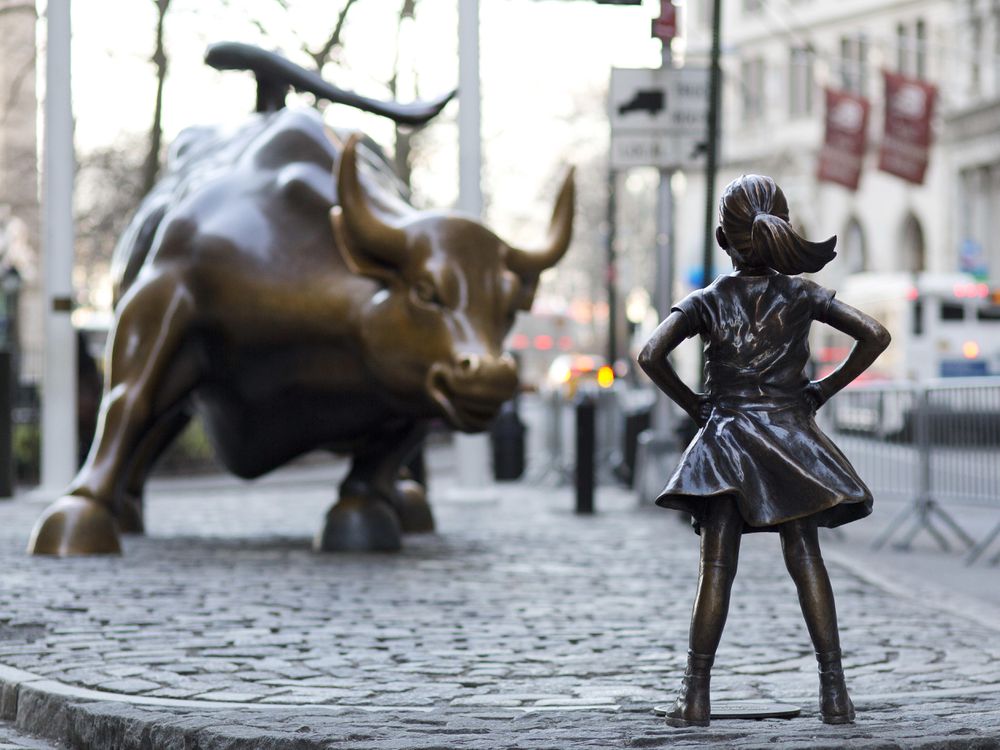
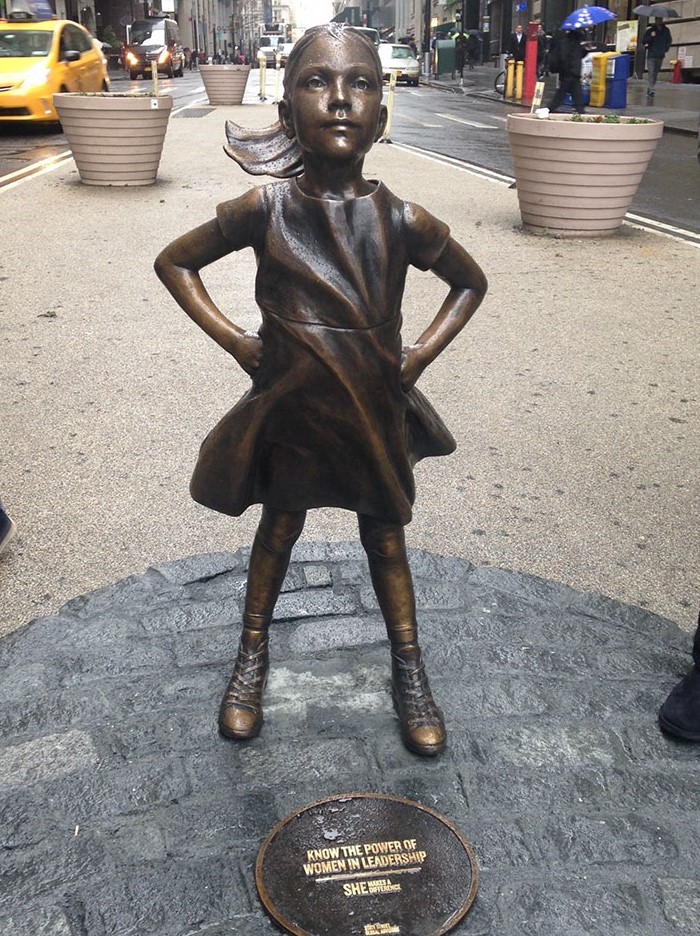
A statue of a “Fearless Girl” faces the “Charging Bull” of Wall Street in New York. She was installed March 8, 2017 in honor of International Women’s Day with an inscription at the base that reads, “Know the power of women in leadership. She makes a difference.” Needless to say, Fearless Girl became an immediate hit, drawing crowds who snapped selfies or stood alongside the bronze child and mimicked her pose: hands on her hips, slight smile on her face, and her skirt and ponytail seeming to blow in the breeze. She stands a little over 4 feet tall. She’s brave, proud and strong. 

“Fearless Girl” was created by the sculptor Kristen Visbal. While the statue became the topic of discussion and stirred controversy by some who wished to have her removed, the push to make the statue permanent began shortly after her installation. NYC Mayor Bill de Blasio called the statue a symbol of “standing up to fear, standing up to power, being able to find in yourself the strength to do what’s right.” He announced the decision to extend her stay until the next International Women’s Day, which is in two days. City officials in New York are still deciding what to do after March 8, 2018 when the fate of Fearless Girl will be decided.

If Charging Bull (male) represents optimism and stubbornness and stands as a symbol of American capitalism creating a better America and a better world, it stands to reason that a confident Fearless Girl should take equal part in creating a better nation and a better world. “Fearless Girl” sends a message to the financial industry about gender equality. This girl facing the bull also says to Wall Street that we need more diversification on the boards of companies because there are serious obstacles that confirm the historical imbalance in discrimination and exploitation in leadership roles. For example, it’s common knowledge that female entrepreneurs receive far less funding for their startups than men. What is surprising is just how far behind women really are. In 2017, according to PitchBook, women-led companies received only two percent of the seed money put into the startup economy. In stark contrast, companies run by men received 79 percent of the $85 billion that seed monies invested last year. The gender gap is wide. Female founders receive funding at lower levels than men. PitchBook reported that while the average deal size for companies led by men was $12 million in 2017, for women-led companies, that average was as low as $5 million. How can we talk about equality when companies are not as committed to leveling the playing field to hire or fund equally the number of women in the corporate industry? The earning gap between genders also remains imbalanced and discriminatory with women earning an average of .80 cents for every dollar earned by men in comparable work. Research also shows that men are promoted to leadership positions based on potential while women are judged on their performance. ‘Thinking’ women who talk in meetings are aggressive while men who do so are bold and smart. Gender biases. They still dominate the corporate industry all around the world. Yet there is no situation I can imagine in which women are less in comparison to men.

This year, it is even more imperative that Fearless Girl stand up to the Bull. Her fate comes in the wake of unprecedented global movement for women’s rights, equality and justice. Sexual harassment, violence and discrimination against women has captured headlines and public discourse, impelled by a rising determination for change. This year, the theme for International Women’s Day, “Time is Now: Rural and Urban Activists Transforming Women’s Lives,” is apropos. We need to help forge a better working world; a more inclusive, gender equal world.  We need role models to inspire the next generation of girls – to lead by example, to show them that no career, no future path, is out of their reach. Empowering girls is the only way to protect their rights. And for those women who have made their mark as equals in their field, we need our young people to view them as the norm, not the exception.

The greatest human rights challenge in our world is achieving gender equality and empowering women and girls from every angle. It remains the unfinished business of our time. Fearless Girl is a powerful symbol to women young and old to take on this challenge. Time is now. Empowering women shouldn’t be temporary; “Fearless Girl” must be a permanent sculpture in our minds and in our world.

Posted in empowerment, gender | Tagged , , , , | 6 Comments

Red

Red. It is the color of Love. It is hot, vibrant, and intense. It is exciting and even aggressive. Red is passion, bold, provocative, seductive, sexy. It is also the color of extremes; the core symbol of power and spirituality, of protection and commitment. Our ancestors saw red as the color of fire and blood – energy and primal life forces – and most of red’s symbolism today arises from its powerful associations in the past. In Asia, red is the color of good luck. It is used to denote a rise in stock prices as opposed to Western stock markets where red is used to denote a negative drop in price. Red is also a magical and religious color. It symbolized super-human heroism to the Greeks and is the color of the Christian Pentecost. It symbolizes joy and the fire of the Holy Spirit. In Catholicism, Cardinals wear red symbolizing their willingness to die for their faith, while in Hindu communities, brides wear ceremonious red, and seal their married status with the pinch of red powder sindoor on their forehead. Red. It warns of danger and signals attention, with high visibility reflected in fire trucks and the logos of the Red Cross and Crescent. Red. It is powerful. It is the color of beating hearts that Love. And what can be more powerful than Love? It is the one universal language that speaks across cultural divides.

From our early school days we learned that there are 12 colors on the color wheel. There is a color theory which demonstrates all the different ways these colors (all 12) achieve harmony with one another. They balance each other with their differences in nuances, shades, hues, intensity or pallor. It doesn’t matter whether the colors are side by side or on opposite ends of the color wheel. They are different yet they “marry” each other well. As far as colors are concerned, opposites refine each other, balance each other, soothe each other and play off each other’s intensities. Because maximum contrasts create maximum stability. Why then can we not apply the same theory to our dealings with human relationships? Why don’t we consciously seek people who are different from us, who are opposite us to create that balance and harmony? Instead, we confine ourselves to familiar neighborhoods where people are similar to us, where we shop at the same grocery stores and send our kids to the same schools, attend the same church, listen to the same music, and remain in our comfort zones. We are not interested to be around people who are different from us much less people who are opposite from us. Yet we are taught to Love all humanity.

With all the lessons of love and tolerance and forgiveness we are taught, we must go below the topsoil of loving only those who are like us. The red color of love is a symbol of profound emotion signifying true love which can overcome all obstacles and challenges. What if we make a 100 or 1000 or tens of thousands part identity wheel which shows any and all possible ways in which we can identify ourselves through race, ethnicity, gender, profession, hobbies, religion, interests, political inclination, ideologies, sexuality, and so on? What if we put them all on a human identity wheel (like a color wheel) and then find our opposite…the ones who we don’t understand, the people with whom we have nothing in common, the ones who will be on the other side of the human wheel? What if we spend time with them, be with them, understand them, love them? Because there is truth in the theory that opposites attract and complement each other, therefore they can bring balance into our lives. As different as they are from you or me, they actually refine and stabilize the persons we are. Whether we seek one person in our lives or whether we seek a culture or a people or a nation on the opposite spectrum of the human wheel, it is in how we handle our differences that create the harmonious power of relationships. Just as colors reflect and bounce and harmonize intensities with their reflective light, so too must we reflect our light of love. We must go beneath the topsoil, go so deep that we discover, at last, that self-love and love for one another are one and the same.
Red. It is the color of love. Use it. Abundantly.

(Red is one of three primary colors. Blue and yellow are its primary companions. Blue is the color of sky and seas signifying depth and stability, confidence and balance. Yellow is the color of the sun. The sun shines on everyone. It does not discriminate.)

Posted in Uncategorized | Tagged , , | 2 Comments