Solidarity Is Owed

Recently I mentioned to a colleague that I participated in a couple of marches in solidarity with fellow humans who were quietly bringing awareness to the deliberate killings and grave breaches of international humanitarian law in Gaza. My colleague was unnerved. “You should be careful. You could be identified. It could lead to potential consequences, and besides, we have our own fight for justice, why bother with others,” she said. I was mortified.

Yes, as Armenians, we have suffered and continue to feel the salt on our wounds with the unfinished business of seeking justice for a genocide denied by Turkey and an acknowledgment of endless violations of international humanitarian crimes against Armenians by the Azeri perpetrators, but, does that mean we cannot shoulder the burden of others while seeking our needs?

The atrocities in Gaza present an urgent moral crossroads especially for Armenians who have suffered genocide without retribution and who claim every year to commemorate our loss of 1.5 million Armenians with the mantra of “Genocide, Never Again.” How can we remain silent and not speak up as we bear witness to the annihilation of the Palestinian population in Gaza? Is our outcry of “Genocide Never Again” solely for our own appeasement? And why must we stop there? Why not continue to raise our voices in allegiance with people who suffer the same irreversible consequences of inhumanity whether in our communities or elsewhere?  Show our faces for all those who are being mercilessly desecrated of human life and dignity. Put aside tribalism and act in defense of our common humanity. Is the aggression that has transformed Gaza into a landscape of desolation, with over 60,000 deaths of which 70 percent continue to be women and children and thousands displaced not part of our shared humanity? Do we not identify with the carnage? Did we not feel the reality of our own plight over these recent years with the blockade of humanitarian aid that cut off food, water and medicine for months, inducing starvation, dehydration, and disease? We said the world is watching. We took to the ICC our documentation of genocide patterns perpetrated by the Azeris for war crimes and crimes against humanity to awaken the conscience and ensure accountability for perpetrators, albeit without much success. Impunity still prevails. Yet we forge ahead, and rightfully so, vigilant to preserve the aspects of our humanity that truly matter. Imagine how much more valid our advocacy for justice, for universal justice, would be if we did not just tut-tut in empathy but shared our empathy by offering our support, and courageously acknowledging the struggle of others with our presence and our voices.

To be true to ourselves, we cannot have ethical inconsistencies of championing our own plight for justice and recognition while ignoring or even dismissing the struggles of others facing similar injustices. We live in diverse societies where selective empathy (or even selective outrage at the perpetrators) can only lead to social fragmentation and resentment.

My contention is that solidarity is owed to those who suffer inequitable treatment, when they are engaged in a struggle against those who treat them with abhorrent inhumanity. Their struggle is partly my own. It resonates within me and although my allegiance is with “my” people, I am compelled and obliged to belong, to defend and represent the tens of thousands of victims of this iniquitous war. I believe in giving those victims my voice and standing alongside them, on their terms, when they struggle against their oppressors.

As a people who have endured a history of pain due to injustice, discrimination or lack of acknowledgement by oppressors, it is crucial that we Armenians stand with courage, true to ourselves to preserve the aspects of our humanity that truly matter.

Empathy, genuine connection to others, emotional depth, and introspection—they matter. They are the pillars of our humanity that support our collective soul, and it is up to each of us to ensure they do not crumble beneath the weight of our modern world. The onus is on us.

So, to those who, like my dear colleague, wash their hands from taking part in the other man’s plight, I say, “Even if or when you lose, solidarity is owed to others not as a form of charity or generosity, but as a duty, as a basic justness. Lean in to your own humanity.”

Posted in accountability, Duty and honor, genocide, humanity, justice | Tagged , , , , , , | 2 Comments

We’ll Do Us

On my way into a grocery store, I observed a mother and her early teen child walking together. The teen, head down and eyes glued to her phone, bumped into another woman without offering any apology or acknowledgment. The mother had no reproach either. The woman was left stunned and speechless. I gently told the young child that she might want to pay attention to where she’s going to avoid accidents. Without even looking up from her phone, she responded, “You do you and I’ll do me.” Her words reflected a disturbing shift in our values—highlighting that we have largely lost the virtues of respect and consideration for others. Instead, our behavior is increasingly driven by superficial aesthetics of arrogance ( mistaken for confidence ) and a sense of self-centered autonomy,  rather than ethical principles of right and wrong.

We need to reshape our culture by being willing to sacrifice some individual autonomy for the greater good of our community. Without integrating moral education alongside fields that are more aggressively sought after in today’s world such as technical and career training, we risk losing the shared values and principles that underpin a well-functioning society. If we continue to fail to do so the distinction between a person of good character and one without moral grounding will disappear.

Regrettably, I don’t see this change happening anytime soon unless parents and leaders actively foster a civic code of decency. As society drifts away from civility, we face increasingly difficult times ahead. Research shows that incivility fosters violence, weakens communities, and leads to societal paralysis caused by conflict and political division.  We need not look too far to see this happening.

Have we regressed to a time reminiscent of the Enlightenment—disenchanted with the value of reason and religion? In other words, are people now free to create their own values? This shift effectively replaces community and the common good with individual autonomy. While capitalism continues to flourish, the emphasis on personal self-determination often overshadows shared moral principles, diluting our collective understanding of right and wrong. With Friedrich Nietzsche’s declaration that “God is dead,” signaling the decline of religious influence on morality, society experienced a significant cultural and intellectual transformation. Decades later, autonomous figures like Lenin, Mao, and Hitler emerged, promising to create a “better,” “purer,” or “pioneering” world—though often at great human cost.

But how do individuals decide what is right if they are no longer anchored in a stable moral order? Without a moral framework, and in the absence of shared standards, manipulation and coercion become the tools to influence behavior of the masses. Advertisers, demagogues, and influencers exploit this vulnerability, especially in a fragmented society where the sense of the common good is weak. Consequently, people often end up wanting what these manipulators promote, simply to fulfill their own desires.

I firmly believe that the strength and integrity of a nation depend on a solid foundation rooted in our homes. Civility, after all, embodies a long-standing tradition of moral virtues essential to democracy—such as empathy, humility, integrity, honesty, and respect for others. These virtues are the moral glue that holds society together. Without civility—rooted in virtues — our communities risk devolving into hostile, accusatory, and offensive exchanges, as we see in these tumultuous times in our own backyards and The District.

Civility is a powerful force capable of uniting people and fostering international brotherhood despite differences in beliefs. While current leadership to whom we should all be looking up neglects and devalues the language of morality and threatens societal stability, we can choose to rise above our impulses and act differently. We can work to restore the civility we were once taught—starting with a simple yet profound step— looking in the mirror, recognizing right from wrong and standing with dignity without pointing fingers. We can restore the civility that once strengthened our communities. We can restore the language of virtues and live up to standards of excellence. In the language of that teen child,  We’ll do Us.

Posted in civility, parent, values | Tagged , , , , , | 2 Comments

Memories Weave a Tapestry

(To the memory of martyred Armenians and the ongoing persecution of ethnic Armenians.)

Shadows drift, the night descends,
I hear the echoes of recent wounds
Seep through weathered stone of centuries
And at dawn’s first light,
The highland winds their faint whispers ascend
Carrying fragmented dreams
In vibrant hues of pomegranate, plum and apricot.

In broken pieces,
Memories weave the tapestry of a culture
Embroidered in our souls where hope ignites
A spark, that cuts through endless nights.
The silence roars, a distant cry,
For those we loved, who said goodbye.
Yet from the ache, a courage blooms
To face the dark,
a strength takes hold to clear the gloom.

The shadow ghost may hover, soft and near,
Reminding us of Hope’s small candle
burning clear and sincere to faith’s glow.
With steady hearts to forge ahead
To uphold the fight lurking in our veins,
To mend the wounds, to heal the dread.

We build anew, with cautious hand,
To heal the scars within the land.
We weave the tapestry of our past
Determined to redeem on canvas our story told
Never forgetting from where we’ve come, where we’ve been
And the beauty of a future brave to be seen.

(tapestry by Meruzhan Khachatryn: Symbol of Armenian Culture)
Posted in genocide | Tagged , , , | 2 Comments

Vote From Your High Place

I have always been taught to be aware of the urge to erect high places in my life that risk opening the door to base qualities which lets darkness in. Life is all about the wonderful boundless gift of Grace. And being given Grace is not a license to do whatever we want. Grace is an act of love. And we must strive to be walking more on the path of Grace as each day passes.

VOTE! If you haven’t already done so, VOTE NOW! VOTE from your high place. Vote from that high place where integrity, compassion and thought for your neighbor was the compass facing north…where you were taught to…”Do unto others as you’d have done to you.” The future depends on us holding world leaders accountable for building a more just and equitable world, where empathy and dignity rule above all. What is your high place? It’s time to step up and take action and Make your voice count! VOTE!

May we find ourselves living in a world where the unchangeable virtues remain in our high places…by the Grace given us.

Posted in accountability | Tagged | 1 Comment

For the Girl Child: Speak Your Voice

Today, Oct. 11 is International Day of the Girl as adopted by the United Nations General Assembly in 2011, to recognize the rights of girls and the unique challenges they face around the world. This year’s theme “Girls’ Vision for the Future” conveys hope that the dreams of girls and young adolecents can lead to an unlimited future if we listen and invest in them. It is a proven factor that “when girls/women lead, the impact is immediate and wide reaching:families, communities and economies are all stronger, and our future brighter.” But what of the disproportioned number of girls whose dreams are shattered and voices buried in the trauma of conflict? Who will listen to them?

Here I am, one girl, turned woman who cannot remain silent.
I cannot remain silent as the war between Israel and Hamas continues to escalate with Lebanon being drawn into the conflict. There is no end in sight. The best I can do is to reaffirm my conviction in a world of peace and justice, where all people—especially women and children—are safe and free from violence.
Many of our sisters have experienced the daily horrors of this war and its profound generational impact on the lives of women, children, and the vulnerable. The violence, torture, and oppression does not serve humanity. They give rise to nightmares that should plague our consciences with screams of inconsolable mothers holding their children, maimed and mutilated by our weapons. I call on all involved in this war to impose a cease fire on warring parties to ensure that women, children, girls, the most vulnerable, and those providing humanitarian aid in war zones are protected from violence against them.
For decades, organizations across the globe and including the Armenian International Women’s Association (AIWA) https://aiwainternational.org have worked tirelessly to uplift women and children, promote their rights, embrace difference and diversity, and improve quality of life, no matter who they are or where they reside—even in the face of war.

I will continue to condemn—in the strongest possible terms—any action that violates essential human rights, especially for those who have lost their voice. I reaffirm my commitment to peace, justice, and the protection of human rights for all. I strongly believe in the necessity of dialogue, mutual respect, and nonviolence as the pathways to resolving deep-seated conflicts.
I call on the international community, including governments, and civil society to work towards lasting peace and justice in the region, rooted in the dignity and security of all people – regardless of nationality, religion, or ethnicity. I call on all involved in this war to impose a cease fire on warring parties by simply stopping arms shipments and participating in an international arms embargo on ALL armed groups involved.
I remain dedicated to advocating for an end to violence, supporting humanitarian efforts, and amplifying the voices of women, girls and marginalized communities who are disproportionately affected by war and conflict.

I continue to believe in a world where justice, equity, and peace are not just aspirations, but realities that all people can experience. I commit to standing alongside those who strive for a future free from violence, where human rights and dignity are upheld for every individual. Will you stand alongside me? Will you raise your voices?

For all humanity, for women and children, and for all girls for now and for future generations.

Posted in humanity, peace, war, women | Tagged , , , | 2 Comments

Inhumanity Across the Globe:Our Dark Legacy

In an era that prides itself on progress and enlightenment, the persistent specter of inhumanity looms large across the globe. Wars and genocidal actions continue to unfold, leaving in their wake a trail of suffering and despair that often goes unaddressed by those in power.

Throughout history, humanity has been plagued by the horrors of war and genocide, acts that reflect the darkest aspects of human nature. From the Armenian Genocide to the trenches of World War I, the Holocaust and the level of destruction, ethnic cleansing in the Balkans, Darfur, starvation and forced deportation of ethnic Armenians by Azerbaijan, the ongoing conflicts in the Ukraine, in Syria, Myanmar, Gaza and the West Bank (and the list is endless), the inhumanity displayed during these times raises profound questions about our collective moral compass. Despite the existence of international laws and organizations designed to uphold human rights and ensure peace, it appears that the power to effect change rests in the hands of the powerful, who frequently choose silence or complicity over condemnation creating a moral vacuum.

War, by its very nature, is a manifestation of humanity’s capacity for destruction. It often stems from a complex interplay of political, economic, and social factors, leading to catastrophic consequences for millions. Moreover, modern warfare has evolved with the use of drones and cyber warfare introducing new dimensions of violence. These advancements dehumanize the “enemy”, reducing individuals to mere statistics in a broader military strategy. This detachment leads to a troubling disregard for human life, perpetuating cycles of violence that seem unending.

Genocide represents one of the most egregious violations of human rights, characterized by the deliberate and systematic extermination of a particular group. Historical examples such as the Armenian Genocide by Ottoman Turks, the Jewish Holocaust, the Rwandan Genocide, the Rohingya crisis in Myanmar, the brutal conflicts in Syria and Yemen to the more recent Azeri brutality toward ethnic Armenians, the ongoing strife in Ukraine and the current killing of 42,000 Palestinians by Israelis, illustrate the chilling reality, that when hatred and intolerance fester, they lead to unimaginable atrocities that escalate into widespread violence, resulting in mass displacement and humanitarian crises. (The United Nations estimates that there are currently over 70 million forcibly displaced people worldwide, a stark reminder of the human cost of war.) Despite widespread awareness and condemnation from activists and some governments, the international response has failed to translate into meaningful action against this inhumanity.

The question of power and responsibility is central to the discourse on war and genocide. The United Nations, established to promote peace and security, has struggled to fulfill its mandate in the face of such challenges. The Responsibility to Protect (R2P) doctrine was introduced and adopted in 2005 to address this very issue, asserting that the international community has a moral obligation to intervene when a state is unwilling or unable to protect its citizens. However, the inconsistent and selective application of R2P (given the veto power held by the five permanent members of the UN Security Council) leads to accusations of hypocrisy and undermines the credibility of those who claim to uphold human rights.

Why do powerful nations often hesitate to intervene decisively in the face of such inhumanity?  Because shamefully, political interests, national sovereignty, bureaucratic inertia, the complex geopolitical landscape, and personal interests often take precedence over humanitarian concerns even with clear human rights violations.

The inhumanity manifested through wars and genocides is a stark reality that demands urgent attention within the international community.  This is a moral imperative that calls for the engagement of all individuals, regardless of their background. As global citizens, we must advocate for accountability and solidarity in the face of injustice.

Remember, Impunity gathers force, and unchecked, it gains momentum. Just two years ago, it started with Azerbaijan attacking Armenians of Nagorno Karabagh claiming territorial sovereignty over the region with the aid of drones from Turkey and Israel. This was followed by a blockade of the area by Azerbaijan that starved 120,000 ethnic Armenians of food, water, medical supplies and hospitalization causing a humanitarian crisis which powerful nations failed to condemn and allowed the Azeri government to cross one red line after another forcing the deportation of 120,000 ethnic Armenians. It is no wonder that Russia took advantage of starting an ongoing war for territorial claim and sovereignty in the Ukraine.  The attack of October 7 on Israeli civilians last year was condemned by countries all over the world, but the unprecedented scale of terror unleashed on the Palestinians since that day and a possibility of all-out war into Lebanon is beyond any justification. This must stop. We cannot surrender to a collective desensitization to the plight of others.

A Call for Global Solidarity

To confront these challenges, a renewed commitment to human rights, accountability, and international solidarity is essential where the the dignity of every human being is respected and upheld. Only through collective action and a willingness to prioritize humanity over political expediency can we hope to mitigate the horrors of war and genocide and foster a world where inhumanity is met with unequivocal condemnation and decisive action.


I ask you, if we are not nations united in the conviction that all people are equal in rights, dignity and worth and that all countries are equal in the eyes of the law, what kind of world does that leave us with?  Will we as global citizens of this earth, surrender to inaction or will we fight to uphold the principles that anchor our humanity and our world? Right now, can we continue to stand by and watch as children waste away, as parents swaddle their dying babies, as doctors watch their patients die from lack of basic medical supplies, while more innocent lives are lost because the world has failed to act? In the absence of global accountability repeated horrors are being normalized threatening to create a future where anything is permitted anywhere in the world. Is this the future to which we want to surrender our children?

The cycle of inhumanity unabated is the gravest threat to our global security today. History will judge us by the courage we show, or will inhumanity be our dark legacy?

Posted in accountability, genocide, humanity, war | Tagged , , , , , , , , , | 2 Comments

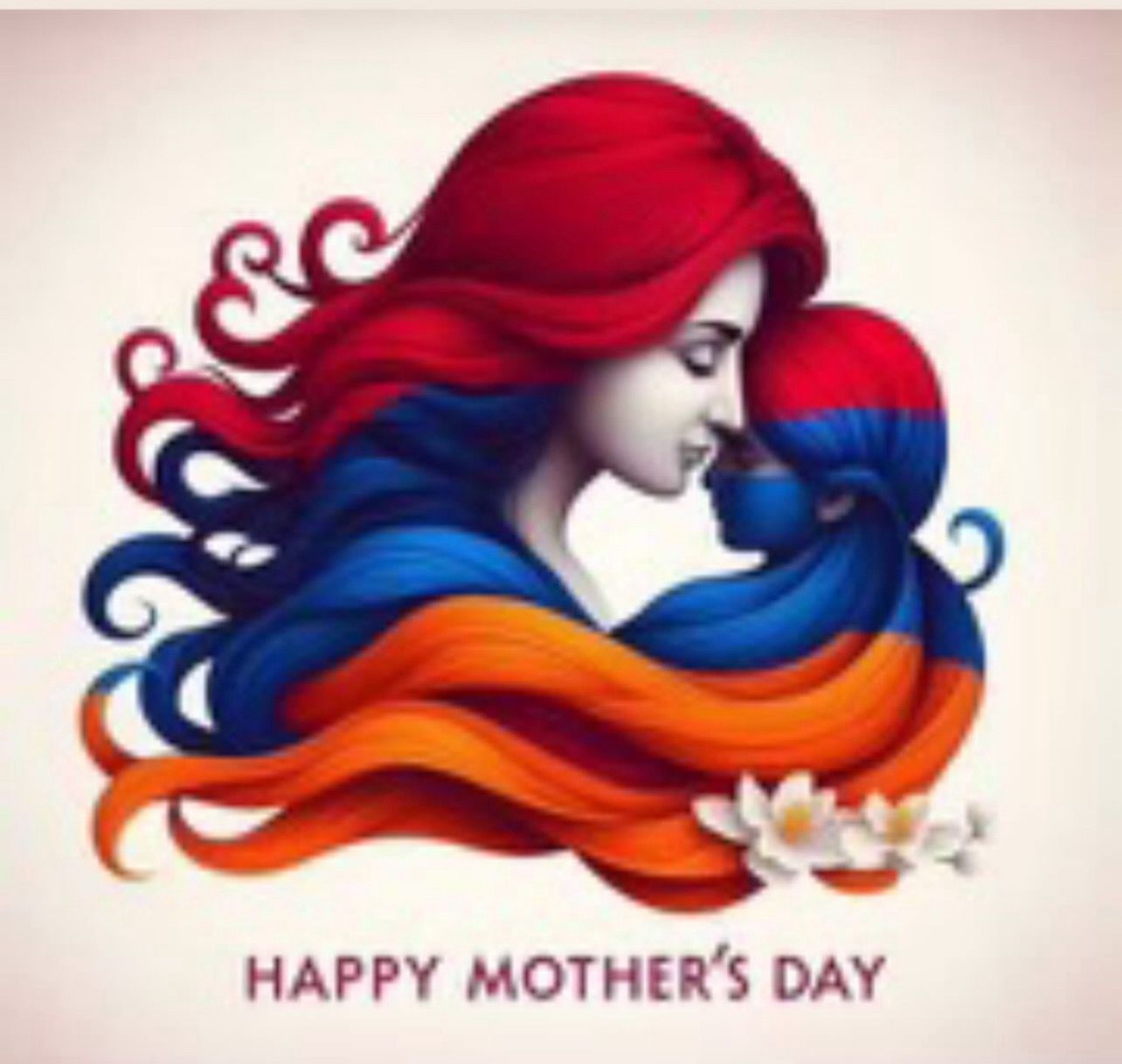
To All Mothers and Mother Figures

Your strength, beauty and depth of love
Shape the present and mold the future
Leaving an indelible mark on the hearts and souls of those you touch.
The sacrifices made, tears shed, hands held, and hearts comforted.
An infinite power,
A beacon of hope,
A testament to the unyielding strength of the human spirit.

To My Mama,
Between dreams and day
I cradle you in my chest
A constant presence left behind
by the footsteps of destiny
Universal and timeless
I am filled with visions of love and dreams of peace.

Posted in Love, mother, Uncategorized | Tagged , , | 2 Comments

Impassive, No More

For over 33 years, members of the organization to which I belong, the Armenian International Women’s Association (AIWA), have worked persistently on issues relating to women, children, and their families. Over the past 10 years I’ve had the opportunity to learn more about the challenges facing women globally through AIWA’s  participation in the discussions of the UN CSW sessions. And as president of the organization it pains me to see that with all the resolutions, commitments and efforts made, gender-specific discrimination still abounds. I refer to the recent documentation by  The Center For Truth and Justice with over 100 pages of proof of crimes against ethnic Armenians with  gender specific brutality against women perpetrated by Azeri forces in Nagorno Karabakh.   (Documentation was presented to the ICC April 18, 2024)

When a female Armenian soldier is captured, mutilated and disrobed, and the head of the Azeri republic awards the mutilator for a job well-done;
When an Armenian woman, mother of three children, captured in Jermuk, is raped, tortured and dismembered by Azeri soldiers and the image is downloaded 20 thousand times among Azeri’s with cheers;
When illustrations of Armenian female soldiers, their eyes gouged out, with fingers and legs cut off and fingers placed in their mouth and genitalia;
When a mentally disabled elderly Armenian woman is “tortured beyond recognition” by Azeri soldiers who sadistically hack off her ears, hands, and feet before finally executing her;
When the oldest, most silenced, and least-condemned crimes, crimes against womenrape, savage mutilation, dehumanization and slaughter … are used as instruments of armed conflict, I cannot remain silent. As an American, I am ashamed that we can play oblivious to these crimes, and as an Armenian, I have a responsibility to speak for women in the country of my ethnicity Armenia.

It is time for the world to hear that it is no longer acceptable to discuss women’s rights as separate from human rights. These abuses have continued because for too long the history of women has been a history of silence. Even today there are those who are trying to silence our words. But the voices of the women representing the injustices toward the women of Armenia and the men of Armenian must be heard loudly and clearly.

No civilian, no person, no soldier, no military force, or unit of any country has the right to commit such atrocities. It a gross violation not just of human rights, but a gross violation of the international humanitarian law.

Human rights, women’s rights, are universal in times of war and peace, in times of conflict or accord, so I urge the ambassadors (if they could hear me at The Hague yesterday) to ensure accountability for the women who have suffered dehumanization at the hands of the Azeris in Armenia; to ensure that today’s documentation of torture and conflict-related sexual violence translates into tomorrow’s prosecutions.

If impunity prevails, these horrific, atrocious acts of violence will continue to be normalized. I urge you to see this as beyond Artsakh. Because what happened in Artsakh sets a precedence for what is currently happening across the globe. Need I remind you of the most recent violations?… Russia and the Ukraine, Israel and Gaza.  But, with Justice enforced, global norms of humanitarian law stand a chance.  As a people who have experienced the toxic legacy of genocide of 1915, we have looked to a brighter future built on the secure knowledge of nations and organizations upholding the principles of universal humanity.

It is time for accountability. One cannot be impassive.

As the president of the Armenian International Women’s Association, I trust that the ICC has the capacity to bring about justice and restore some form of dignity to the families of the women and men who have brutally suffered at the hands of the Azeris. Dignity cannot be achieved unless all governments, here and around the world, accept their responsibility to protect and promote internationally recognized human rights, and criminally charge the perpetrator to the maximum extent of the law.

 Azerbaijan must be accused of committing these war crimes.

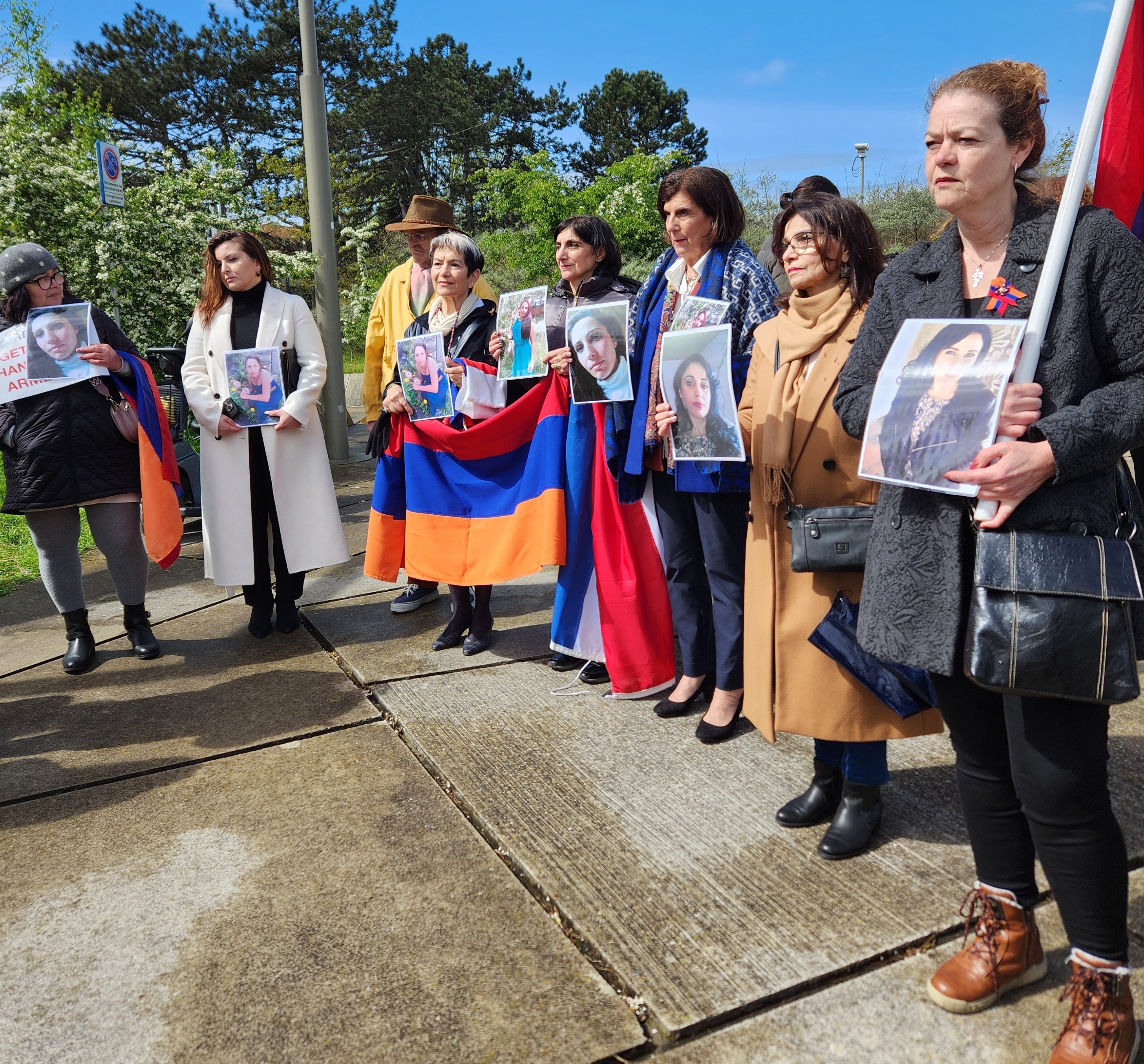
Yesterday, as I stood outside the  ICC court house and saw Lala Abgaryan, sister of Gayane one of the mutilated soldiers, rise above her pain of brutal loss and the inhumanity suffered, I heard the remark  “what courage she has!”  Yes, she is courageous… as are the women of CFTJ presenting documents that incriminate Azeri leadership, and AIWA who soldier on to protect human rights, women’s rights, and try to make a dent in accountability and move the pendulum of justice to the right side of history. They are courageous, but the courage I really want to see is from leaders in a position to do something, whether they are Ambassadors, Heads of State, Member States here at the ICC, I want to see that courage, that courage of moral outrage for the torture and atrocities carried out by the Azeris on Armenian women or men, civilian or soldier. I want to see that courage, the kind that fuels the power of international law to seek justice.

On behalf of a people who have suffered disproportionately through this continued dehumanizing attritive genocide,  I request that the international community take action to punish Azerbaijan for the deliberate Armenophobic gender selective brutality and be accountable for the gross assault on human rights and violations of international human rights laws.

I demand accountability.

Posted in accountability, gender, genocide, humanity | Tagged , , | 3 Comments

A Troubled World

The news is affecting me far more than it used to. My mind is tired, and my heart feels exhausted, expired. It has been so for a year. It started December 12, 2022, when Azerbaijan launched a 10 month blockade of the Republic of Artsakh by sending citizens and an army to block the Lachin corridor, a humanitarian corridor which connects Artsakh to Armenia and the outside world. 120,000 defenseless indigenous Armenians of Artsakh were “imprisoned,” starved and deprived of all humanitarian needs while the world lost sight of its humane commitment to safeguard the defenseless who had not taken up arms. In the end, the Lachin corridor known locally as the “road to life” became the road to loss of life, home, land and history of Armenians in Nagorno Karabagh through their forced displacement and exodus.

My first “glimpse of war,” was through the memories of grandparents who spoke of slaughtered children, sisters and brothers, aunts, uncles, nieces, nephews, fetuses ripped from mothers’ wombs during the Armenian Genocide of 1915. Their memories of a systematic effort to eliminate every trace of a people whose right to live were but a whisper in my ear now grown louder over the years. Armenia faces a serious conundrum when it has neighbors led by tyrants who applaud terror. And when tyrants are allowed power there is no rule of law, there is no governing order. There is only the inordinate desire to reach their goal by all means possible. Azerbaijan fueled by Turkey is determined to eliminate every trace of Armenian culture and heredity from the face of the Caucasus. And what opened a further breach in my heart, flooding it with uncontrollable emotions was the knowledge that Israel had provided Azerbaijan with 70% of its weapons used against the Armenians of Nagorno Karabakh. https://apnews.com/article/armenia-azerbaijan-nagorno-karabakh-weapons-israel-6814437bcd744acc1c4df0409a74406c

It is impossible to shield myself from the world’s pain.  As I take in the news of what is really happening around the world, my heart is inconsolable. I find myself stumbling in a dualistic world of good and evil, of unconditional caring and uncommon cruelty. It is an inexplicable world of tyranny and autonomy, of bullets and butterflies. We are in a deepening chasm.

It will take every bit of heart, every bit of compassion, and our highest selves to navigate through this troubled world. And we must find a way. The U.S I know and believe in values human life and the rule of law.  It must therefore insist on upholding the rules and norms of behavior in all regions of conflict and not lose sight of its commitment to humanity. I understand America’s government has a friendship with Turkey, Azerbaijan and of course Israel, but friendship requires speaking hard truths about a commitment to democracy, to human rights and the rule of law.

I know there is good in this world. Most people are good. I see them around me. At the supermarket, they let others move to the front of the line, drop their dollars in the Red Kettle, feed the hungry and homeless, return shopping carts even when in a rush to get home, and share a seat at their table with a stranger. They visit the elderly, read bedtime stories to children, listen to extensive phone conversations after a long and draining day, smile, lend a helping hand, rescue pets, water a neighbor’s yard, comfort, heal, volunteer, pray for people they don’t know, and the list to do good every day is endless. Most people are good.

Yet, we have allowed 120,000 Armenians to practically die of starvation, malnutrition and medical assistance, losing lives and homeland with prisoners still in captivity at the hands of Azeris; and yet, we are enabling the leveling and destroying of Gaza where 1.9 million innocent indigenous Palestinians lived with  70% of the nearly 18,000 killed were women and children. https://www.aljazeera.com/news/longform/2023/10/9/israel-hamas-war-in-maps-and-charts-live-tracker.    None of this solves the problems at hand. All it does is show that we care about some humans and not others. And it serves no purpose except to tolerate genocides and intensify hatred that has been built up through an endless degradation of Gaza resulting from Israel’s periodic bombings (which are not spoken of) and from its economic blockade.

I cannot shield myself from the world’s pain but I must cling to a belief that there are good people in this world. I am fully convinced that good people ultimately thrive and unethical people will ultimately be defeated. It just takes every bit of heart, every bit of compassion, and our highest selves.

Meanwhile I will ache and mourn for all loss of lives. I will weep, for it strengthens my hope. I will allow my heart to be broken, for it wells with conviction and compassion, and that is life to our suffering world.


Posted in Uncategorized | Tagged , , , , , | 3 Comments

Shoulder the Responsibility

I was not alive during the Armenian Genocide. I am grappling with the fact that I am three generations removed, and the witnesses to the horrors of the Genocide in my family of survivors are dead or dying. The memories of slaughtered children, sisters and brothers, aunts, uncles, nieces, nephews, fetuses ripped from mothers’ wombs in a systematic effort to eliminate every trace of a people whose right to live are but a whisper in my ear. The whispered memories belong to them; and soon, it will no longer be possible to hear from elders or see in their eyes the irreplaceable losses suffered, and the guilt of sole survival through endless deportations, but it is my ethical imperative to incorporate their voices and tell their stories as testimony to those who continually try to deny the reality of the Armenian Genocide. It is also your imperative to tell the stories of collective recollection and shoulder the responsibility to the next generation.

The bitter truth is that 108 years later, there is still a war going on. Artsakh is under attack, and nobody seems to care. Armenians are still facing the threat of annihilation at the hands of Azerbaijan fueled by Turkey, and the world is complacent.  Artsakh is part of Armenia, and its ancestral land has been part of Armenia since 180BC. Between 1914 and 1918, the Ottoman Empire took over Baku, creating the independent country of Azerbaijan with Baku as its capital. The first violence of the current conflict broke out in 1988. At the time, a quarter million Armenians living in Baku were being targeted in a pogrom that occurred prior to the dissolution of the Soviet Union. Armenians were beaten, murdered, and expelled from the city. (Currently there are no Armenians living in Baku.) Artsakh voted to dissolve its autonomous status and join Armenia. Between 1992 and 1994, war over the territory claimed more than 30,000 lives and displaced hundreds of thousands of people. Since 1994, Artsakh has been occupied and run by a self-declared government of ethnic Armenians backed by Armenia all these years.

This tiny piece of land, this Armenia, which has been subjected to escalation of the attacks leading up to the most current blockade of the Lachin corridor is exasperated by the fact that Turkey is openly supporting Azerbaijan’s effort.  Proof of which Erdogan broadcasted in reference to Armenia when he said, “We will continue to fulfill this mission which our grandfathers have carried out for centuries in the Caucasus region.”  Azerbaijani president Aliyev has also echoed similar sentiments.

The ongoing blockade of the Lachin corridor (today in its 133rd day) is endangering the lives of 120,000 ethnic Armenian residents in Nagorno-Karabakh without access to essential goods and services, including food, life-saving medication, and health care.   While countries tut-tut, call on Azeri and Turkish authorities to end this unfolding humanitarian crisis, there seems to be no end in sight. Is it true that we are in the words of William Saroyan, “this small tribe of unimportant people, whose wars have all been fought and lost, whose structures have crumbled, literature is unread, music is unheard, and prayers are no more answered?” It cannot be. We are not “unimportant” people. This is me, this is you, this is us I am talking about. You know us. We work together, we build together, we share stories, we break bread and drink together. We share our homes and our hospitality with you. We are friends, we are loyal, we are peaceful, loving people. Yet there is a war we must win, structures to raise, memories to write and stories to be read, music to compose and dance to, voices to raise and prayers to be heard.

We cannot remain silent. We will not remain silent, and neither should you. We are the children and grandchildren of genocide survivors. Our collective recollection relies on telling our stories, not with a whisper but with a shout, to the next generation.

POST, INFORM, EDUCATE, DEMAND.  Break the silence of the higher powers. It is          ours to shoulder the responsibility.

Posted in genocide, war | 1 Comment