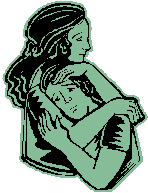
Choices

It was one of those weekend mornings. I had many things to do in and around the house but given the option of “let’s go out for breakfast,” or stay in to catch up with my responsibilities, I chose to go out for a real American breakfast at a diner close to home. As I placed my order in between questions of “how would you like your eggs cooked?, bacon, ham or sausage?, cottage fried potatoes or hash brown?, wheat, white, rye or sourdough toast?” I couldn’t help but laugh as I recalled my first time in the United States (some thirty eight years ago) when I was first introduced to the multiple choices and decision making process of ordering toast. At the time I had stared the waitress in the face, completely confounded, not having understood that I had choices of different breads available and had to pick a) b) c) or d). I disliked multiple choice questions during school and college and there I was at a diner being given a multiple choice of breads. After much hesitation and debate, I remember picking b) wheat, feeling somewhat unsure not knowing if I had made the right choice, and then suddenly feeling quite smug that perhaps I had made the right choice because the waitress had smiled and had said “excellent choice,” as though there was a right or wrong answer to her question of my choice.

Therein started my exposure to the many consumer choices I had to make. Don’t get me wrong. It’s not that we didn’t have choices presented to us in our days of decision making that guided our lives and built our futures. We had that, and to top it all, we had the added responsibility of being aware of our God given free will to make choices and be held morally responsible for our actions. We just never were that inundated with the plethora of choices in the market as is available today. And I’m not quite sure that having all these choices available is actually to our advantage. Our brains, already over-worked and exhausted, cannot cope with too many choices, at least mine can’t. We’re asked if we want small, medium or large; full fat, non-fat, half & half, soy or almond milk; vanilla, strawberry or chocolate; skinny, bootleg, boyfriend or bellbottom. Americans have come to expect a wide array of choices, and most companies, be they car companies, clothiers or coffee shops, have been more than willing to pony up. But more choices do not always equate to happier consumers.

Actually, a study published in 2008 by the American Psychology Association claimed that being presented with too many options stresses our brain. It gives it too many things to compare, and the problem is, that we simply don’t have the time to research or investigate all of them… and then we feel like we have failed. It is not that we are saddened by the decisions we make in the face of abundant options, but rather that we are rendered unsure, burdened by the responsibility of choosing optimally. In fact, some studies show that having to make too many decisions can leave us tired, mentally drained and more dissatisfied with our purchases. It also leads us to make poorer choices — sometimes at a crossroad when the choice really matters.

For earlier generations, the ideal of making well-informed decisions meant simply looking things up in a reference book. Today, with Twitter and Facebook and countless apps fed into our smart phones, the flow of facts and opinion never stops. That can be a good thing, as when information empowers workers and consumers, not to mention whistle-blowers and revolutionaries. Yet, researchers from several universities have determined that even though humans’ ability to weigh choices is remarkably advantageous, it can also come with some serious liabilities. People faced with numerous choices, whether good or bad, find it difficult to stay focused enough to complete projects and handle daily tasks.

That an excess of choices and a surplus of information is changing the way we think, and not always for the better, is a truth. That there are no wrong or right answers to the choices we make; there are only consequences to our choices and actions, especially in the bigger picture of life, is yet another truth. But where does that leave me with my choice of breakfast bread?
“I’ll have option e) English muffin,” I said. “Excellent choice,” said the waiter.

Posted in Uncategorized | Tagged , , , , , , , | 7 Comments

Fatherhood

In June of every year, we honor fathers.

The importance of my father in my life has never been more vivid as it is now with the growing statistics of damage done by absentee fathers.  My father was a proud family man, who believed that a father should provide for his children. He grew up in poverty, but managed to educate himself at a later age through savings accumulated by odd jobs on construction sites. He revered his hard working mother. She washed, mended and ironed shirts for generals and officers of British and German military who were “guests” at the Le Baron Hotel in Aleppo, Syria, while his father was absent on many occasions throughout his childhood. Yet, dad managed to turn himself into a man of the world vowing to be different than his father.  He studied at nights under the flickering light of an oil lamp and became a contracting engineer. He believed in helping his heritage and employed Armenians with every opportunity presented.  Dad never sweated the small stuff. Come to think of it, he didn’t sweat the big stuff either.  His faith was firmly grounded in God.  My father was a romantic and an idealist. He wrote poetry and short stories, exchanged letters with other Armenians of note and foreign political and religious leaders stirring responses re the Armenian genocide. He believed in education as key to self-improvement.  His definition of a real man was “one who is so secure that he needn’t prove his masculinity by raising his voice or his fist.”

The first Father’s Day was celebrated in Spokane in 1910. The idea for Father’s Day is attributed to Sonora Dodd, who was raised by her father after her mother’s death during childbirth. While listening to a sermon at church on Mother’s Day, she thought about all her father had done for her and her siblings and decided fathers should have a day, too. Because Dodd’s father was born in June, she encouraged churches in her area, Spokane, Wash., to honor fathers that month. Over the years, the idea spread, and people lobbied Congress to establish the holiday. In 1916, President Woodrow Wilson, who had signed a proclamation establishing Mother’s Day, approved the idea. In 1924, President Calvin Coolidge made it a national event to “establish more intimate relations between fathers and their children and to impress upon fathers the full measure of their obligations.” However, a holiday honoring fathers did not become official until 1966, when President Lyndon Johnson declared that the third Sunday in June would be Father’s Day. President Richard Nixon made this proclamation permanent in 1972.

As societal patriarchy is slowly diminishing, especially in countries where men and women are equally educated, as masculinity continues to undergo a constant process of redefinition, fatherhood has never mattered more than it does now. The old rituals or methods of proving yourself by making a living, owning property, wooing and romancing, being head of  household, even combat itself is now gender-neutral. What remains indisputably masculine only is fatherhood (just as motherhood is indisputably feminine). Fatherhood should be the one truly binding connection among men.  It’s too important, especially now. According to research from the Pew Research Center (2011), fathers who live with their children have become more intensely involved in their lives, spending more time with them and taking part in a greater variety of activities (tripled since 1965). However, the number of fathers living at home with their children has decreased significantly in the past half century, which means “fatherlessness” is a real crisis even as fatherhood gains significance. In 2008, 41% of births involved unmarried women compared with 28% in 1990. Fatherlessness as a condition has been linked with virtually every social ill you can name (the big exception being lesbian families): Young men who grow up without fathers are twice as likely to end up in jail, 63% of youths who commit suicide are from fatherless homes, and 71% of high school dropouts come from fatherless homes.

While I understand that the statistics presented do not reflect all ethnicities, and today’s fathers of the Armenian culture are perhaps overwhelmingly stronger in their personal transformation when they become fathers, we cannot ignore that we have many absentee fathers among  Armenians at home. My hope is that we have the courage to talk about it and to work collectively to find the real man in each of our Armenian male patriots.

Happy Father’s Day.

Posted in Uncategorized | Tagged , , , , , , , | 4 Comments

Motherhood

There is no other way to say this. Motherhood belongs to all women as a sacred trust from God.  It is every woman’s reality, not just entrusted to a privileged few.  Even Eve was called “the mother of all living things” before she ever bore a child. Mother is the word that best describes the essence of who we are as women. It defines our identity, our divine nature and the gifts with which we have been endowed.  Women are the keepers of the balance of humanity, the conscience of nations, the flame and primal homemakers that light the hearth of homes, and rise up the next generations. There is strength in women that comes from within by the sacred trust, and with the advantages of modern times, women are fiercely powerful.

Who better than a woman will fight for the welfare of her child, or any child? And if we used our powers gained collectively from outside sources, we could insist that the children of the world no longer bear hunger; that the millions be given a basic education; that our children seek and know true and everlasting values; that punishment for child trafficking be seriously enacted; that the abduction and brutalization of children be addressed; that every child have shelter; that wars be diminished… and the list is endless. Yes, we are the homemakers of the world, the mothers of the children of the world, and the greatest power that lies within us is the ability to protect the primacy of our sacred mission and guard it with pride, making the welfare of our children our bottom line.

I am almost certain that there is no one who cannot name his or her grandmother, mother, aunt, sister, godmother or teacher, as his or her personal inspiration –good or bad, directing the course of the lives she touched.

motherhood

To the women who cry with joy when they hold their baby in their arms for the first time and to the women who give birth to babies they will never see. To the women who gift babies to other families and to the women who adopt children. To the women who have milk stains on their dress and ketchup on their knees and to the women impeccably dressed in suits. To the women who turn their heads when they hear the word “mama,” even though their kids are nowhere near and to the women who make heads turn. To the women who sit up all night with a sick child, compassionately saying, “it’s ok, I’m here,” and to the women who sleep through the night. To the women who pray and to the women who ask for a prayer. To the women who yell at their kids and to the women who speak tenderly. To the women who read “Love You Forever” each night and to the women who read text books and documents in preparation for tomorrow’s challenges. To the women who hold a child’s hand for encouragement and to the women who let go to instill independence. To the women who teach children to tie shoelaces and to the women who use Velcro. To the women who suffer separation anxiety on the first day of kindergarten and to the women who suffer the same as their child leaves for college. To the women whose hearts miss a beat each time their child drives off in a car and to the women whose hearts miss two beats at each sight of a paramedic.  To the women who watch their child perform and proudly proclaim “that’s my child/grandchild.” To the women who bake cookies for a bake sale and to the women who don’t. To the women who car pool kids on the block and to the women who drive their one child.  To the women of soldiers and to the women soldiers. To the women who silently anguish for a child gone astray and to the women who crush remorselessly the odds of finding that child. To the women whose hearts ache for a child’s disappointments and to the women who boast their successes. To the women who’ve lost a child and to the women who share the burden of loss. To the women of victims of tragedies and shootings and to the women whose children are involved in the shootings. To the women who hug their children in relief for their safety and to the women who watch in horror, clinging to the last thread of hope of survival. To the women who do their share in law enforcement and to the women who bend the rules. To the women who lead and to those who follow. To the women who teach and to those who learn.  To women young, middle or aged, with or without child, working at home or out of the home, married, single or divorced, with money or without, who use their strength and their powers to become mothers of all living things, HAPPY MOTHER’S DAY.


Posted in mother, Uncategorized | Tagged , , , , , , , , | 6 Comments

I Abhor War

When I was little, I heard snippets of accounts of atrocities against Armenians and my grandparents’ generation.  I said to my father that I thought war was wrong. “It’s not that simple,” he had said.  As I grew a little older and realized during grueling history classes that wars were fought for land between kingdoms and countries, between the haves and have not’s, I said to my father that I thought war was wrong.  “Were I Queen of the World, I’d make war an act against the law,” I had said.  “Wish it were that simple,” he had said. By the time I was in high school in England, my thoughts of war being wrongs of history past were shattered as war raged in Ireland. I couldn’t understand how life could go on normally in other parts of the British Isle while bombs were blasting in Ireland with such geographic proximity. I still thought war was wrong. “How can you justify war when peace is the answer?” I had said. “Sometimes, you have to fight for peace,” said my father. Later, I found myself in the midst of a war in Lebanon. It was then that I understood how life could be lived in a country while her people and neighbors were at war. Rockets blasting from different quarters of the cities, gunfire ripping the air through street combat between various factions, and car bombs all took their toll. It was war. Yet, what actually stole my innocence were the intentional massacres triggered by fear and deep rooted hatred, massacres that targeted people of Palestine and Lebanese Shiites.  Slowly, the stories I had heard, when I was little, of massacres and exile and genocide against the Armenians began to take shape and form roots in the folds of my mind.  But the most horrific awakening was the thought that these crimes, these long term atrocities were being inflicted by human beings much like me. Example: The Sabra-Shatilla massacre of 1982 in Lebanon was facilitated by a man who once was a child with whom I had played. We were next door neighbors sharing a narrow stairwell to our apartments where our tricycles and toys were stacked and kept. We were friends who laughed together, ate together, celebrated Christmas together and ran up and down stairs together, often skipping and jumping two by two.

I have been raised by victims of genocide who have spiraled through the chaos of its labyrinth, persecuted and exiled.  They were once children who grew up with harsh realities of trauma and hardship that come with the responsibility of a culture trying to survive with the “baggage” of its history.Realities of horrific experiences and destructive violence, loss of homes, separation from parents, being forced to flee, witnessing death and atrocities, and eventually harboring non-reconciliatory resentment.

War is wrong. Defensive or offensive, it leads to killing human beings. War is violence and its outcome unpredictable. Can anyone tell me how any one side will benefit from war when its true victims are the children…the future of humanity? Life and teachings of all Holy books are intended to move humankind forward, evolve, and create. It is not intended to halt our journey and meet our demise in a hail of bullets or shrapnel.

It is appalling to know that during the 20th century, more than 50 million people perished under the guise of war in genocidal campaigns around the world — from the Armenians in Anatolia to the Jews in Germany to the victims of the Khmer Rouge in Cambodia, to the Hutus and Tutsis in Rwanda, and Bosnian Muslims in the former Yugoslavia, to the persecution of the Kurds in the Middle East, and most recently, the persecutions in Syria, and currently the intentional persecution of Christians and Armenians from Kessab.

I abhor war. But now I understand that we live in a world where the forces that seek to divide us are stronger than those that unite us. We must do more than stand in silence next to each other. “Sometimes, you simply have to give up who you are in order to be who you are,” had said my father. I didn’t understand him then, but now, I, who abhors war, say, “Sometimes, we must go to war to make the grandest statement about who we truly are.”

The month of April has been declared Genocide Prevention Month since the Armenian Genocide, Holocaust, Rwandan, Bosnian, and Cambodian genocides are commemorated during this time. The commemoration combines genocide remembrance with prevention and awareness.

It was in April 1915 that the Ottoman government began rounding up and murdering leading Armenian politicians, businessmen, and intellectuals, leading to the extermination of one and a half million.

In April 1933, the Nazis issued a decree paving the way for the annihilation of 6 million Jews of Europe.

In April 1975, the Khmer Rouge entered Cambodia’s capital city and launched a four-year wave of violence, killing 2 million people.

In April 1992, the siege of Sarajevo began in Bosnia. More than 10,000 people perished.

In April 1994, the plane carrying the president of Rwanda crashed and triggered the beginning of a genocide that killed more than 800,000 people in 100 days.

In April 2003, innocent civilians in Sudan’s Darfur region were attacked; 400,000 have been killed and 2.5 million displaced in a genocide that continues today.

It is April 2014, and the Syrian government continues to raze cities at an alarming rate with over 130,000 dead. Genocide Watch warns that massacres and mass atrocities against pro-democracy protesters and the civilian population are being committed by Syrian security forces under the command of the al-Assad government.

“April is the cruelest month. We must ensure that the list of April’s genocides grows no longer.” (Ellen Kennedy, Executive Director, World Without Genocide.)


Posted in Uncategorized | Tagged , , , , , , , , , | 7 Comments

He, too, Can be Bossy

The use of gender based language defining masculine and feminine roles has changed our perception of what defines us and will continue to change across time, culture and place. Just two days after the United Nations and women of the world celebrated International Women’s Day, the Girl Scouts and Sheryl Sandberg (COO of Facebook) teamed up with women of fame to ban the word “bossy” because it is “symbolic of systemic discouragement of girls to lead.” According to them, the word bossy is used as a negative message when referenced to girls/women and not negative when referenced to boys/men. While some argue that accepted gender identity must be reexamined in order to eliminate socially constructed traditional gender roles, I remain untroubled by traditional gender language and see no reason to change descriptions and gender explicit pronouns. I am of the personal conviction that it is not the language that determines behavior. It is the culture, the support systems in place and the opportunities, (and unfortunately, the economic and power politics at play). Language will not change gender bias. It is an entire culture of changing habits and behavior that will alter the way we look at gender equality.  If the word bossy offends a woman into stereotyping her as the female gender with a negative message that holds her back, then she must teach the children and adults to use the same language on boys and men. He (They) too, can be bossy. Do not change the language. Use it; share its true meaning with both genders alike. Eliminating certain words or banning their use will not change the culture of gender stereotype.  For years, men were asked to help around the house and with the children, stereotyping the woman with designated home/family chore responsibilities, while women were asked to help bring home the bacon stereotyping the man as the designated breadwinner. We changed how we use the word “help” (not prohibited it’s use as there are still some who prefer to use the word as it implies) into “share” in the responsibilities. Progress in eliminating gender bias is to be made through proper use of language and changes in behavior…giving the same opportunities to all children, to pursue their individual interests without judgment based on gender.

Two years ago a pre-school in Sweden, “Egalia,” took the elimination of gender pronouns to unusual extremes by avoiding the use of “him” and “her” and addressing the kids as “friends” rather than girls and boys.
It is one thing to create programs that make sure children do not fall into gender stereotypes and it is another to become obsessed with obliterating gender. The fundamental issue here should be equality of possibilities between the sexes and not the nullification of gender. The world doesn’t need gender-neutral pronouns. It needs gender neutral approaches to teaching all subjects with equal enthusiasm to boys and girls.

gender

I am a girl. I am a boy. Let me run around and turn whisks and sticks into swords and play rough. Show me how to cook and bake and how to build with blocks. Hand me a hammer and help me use a needle and thread. Allow me to cuddle a puppy and play with dolls; at the same time show me the mechanics of construction vehicles. Teach me science and teach me art. Show me that I can be a model and a truck driver. Tell me I can be a plumber, or a judge, or a wait staff. Teach me to value being a doctor, nurse, and lawyer. Cultivate in me the joy of being a homemaker, an engineer, physicist, or nutritionist. Make it possible for me to become a farmer, firefighter, senator, president, a pilot, police officer, teacher or a nanny. Allow me to cry when I’m hurt or afraid, and to laugh boisterously among friends. Open my mind to revere beauty and have respect for the preciousness of the earth. Expose me to Cinderella, the Paper Bag Princess and Don Quixote. Teach me universal chivalrous conduct and let me know the difference between that and sexual harassment.
I may be strong in some things and weak in others. I may be good in math, acrobatics, and/or writing. I may be weak in art, basketball, home economics. Allow me my weaknesses and encourage in me my strengths. I am entitled to the same laws, the same respect, humanitarianism, social power, and prestige as my friend next to me.
You and I should be exposed to all things, and you and I should decide what of those things we want. And in all these things, I am equal to you. There is no hierarchy in my forte and choices. Yet, as important as all these professions and choices are, there is one thing that matters more. I am biologically different and my body chemistry is different. You and I, we both produce the hormone testosterone but if you happen to be (allow me to say) she or woman, you produce around 70 percent less than (allow me to say) he or man. You and I, we both produce oxytocin, but if you happen to be him or man, your testosterone hormones counteract the effects of oxytocin whereas her or woman’s estrogen hormones will enhance the oxytocin that promotes affection within relationships especially during childbirth and breastfeeding. Similarly, I either produce ova or I produce sperm.
I am She.  I am He.

Posted in Uncategorized | Tagged , , , , , , , | 5 Comments

Adult Orphans

These past few months have been a time for loss of parents among many of my friends. Today, another friend of mine lost the second of her two parents.
I recall when I lost my last surviving parent a little over a year ago. I felt like an orphan; an adult orphan. While I do not deny that it is the natural order of things, nor do I deny the tragedy of losing parents as a small child, the fact remains that however “adult” we are when both our parents die, we feel like an orphan.
We all know that we will lose our parents someday. And we all know that in the natural order of life we expect to outlive our parents. Yet that knowledge provides little comfort to the pain we experience and the void that we feel when we finally lose them. Nothing prepares us for how we feel when it happens: abandoned, orphaned, lost, and like a child, silently crying for our mama and baba. We grieve. But our grief stems from the sorrow of longing for the place and people we called home. A people who were the guardians of our childhood memories; the ones who recorded our every first move. A people who were the chain that linked us to the past of family histories. After all, no one else could name and identify the faces in faded photos stacked in boxes like they could. They marked our journey to adulthood. A people who provided us with the first and last layer of protection when we let down our guard. A people whose legacy is now passed on to us, their surviving offspring.
When the death of parents comes at the end of a life long and well lived, we use the example of their longevity as a means to comfort. “He had a good life,” we say. “She was fortunate to have seen her grandchild’s wedding,” we say. “We all should pray to live as he did,” “Good health to the young and next of kin!” “May you inherit his light,” we say. It’s as though we excuse ourselves from grieving because we are adults, and with so much else going on in the world around us we do not allow ourselves much space and time to grieve. Even the ailing or aging parent who lives long, justifies his/her approaching departure from this world of human warmth with similar reasoning. I recall my father-in-law who, towards the end of his life would whisper to those near and dear to him “I’ve lived well, I’ve lived long.” My mother also would confirm that her life was well lived with love and that we too should be content with her years on this earth.
Whether we are the caregivers to our parents or revelers of their independence, the reality is that the death of both parents becomes a profound, life changing experience. We grieve for the passing of our own childhood and youth. We grieve as though their death somehow wipes away proof or acknowledgment of our own life through them. Truth be told, we find ourselves reassessing our lives, and we become fully responsible for our everyday living with a heightened sense of mortality. We are no longer someone’s child, and we subconsciously realize that we are now the elders to whom the children and grandchildren will look toward for all their vices and virtues, distinguishing family qualities and inherited characteristics. We become the matriarchs and patriarchs of our families. And with that responsibility on our shoulders, we come to the realization long after they have died, that we carry them with us each day and that it is their voice that reverberates within us telling us we are still their daughter, their son, and always will be.
In honor of all whose parents are no longer of this world.

Shifting the Sun by Diana Der-Hovanessian

When your father dies, say the Irish,
you lose your umbrella against bad weather.
May his sun be your light, say the Armenians

When your father dies, say the Welsh,
you sink a foot deeper into the earth.
May you inherit his light, say the Armenians.

When your father dies, say the Canadians,
you run out of excuses.
May you inherit his sun, say the Armenians.

When your father dies, say the French,
you become your own father.
May you stand up in his light, say the Armenians.

When your father dies, say the Indians,
he comes back as the thunder.
May you inherit his light, say the Armenians.

When your father dies, say the Russians,
he takes your childhood with him.
May you inherit his light, say the Armenians.

When your father dies, say the English,
you join his club you vowed you wouldn’t.
May you inherit his sun, say the Armenians.

When your father dies, say the Armenians,
your sun shifts forever.
And you walk in his light.

Posted in Uncategorized | Tagged , , , , , , | 4 Comments

Love and Hate

As with all things that have opposites, the saying goes “to know how to love, one must know how to hate.”
The family in which I grew up did not talk much about loving. It was a given. Neither did they talk of hating. It was not a given. We were taught the virtues and the vices; the positive and the negative. We were encouraged to feed into the virtues with moral categories setting the boundaries of acceptable behavior leading to love with a passion. The vices of wrath, greed, sloth, pride, lust, envy and gluttony were discouraged because when practiced they could nurture undesirable, ugly behavior leading to hate with a passion.
There is a story of an old Cherokee who told his grandson of a battle that raged within people. He said that there were two wolves inside us all. “One is Evil; it is anger, envy, jealousy, greed, and arrogance. The other is Good; it is peace, love, hope, humility, compassion, and faith.” The grandson thought about this for a while and then asked his grandfather, “Which wolf wins?” To which the old Cherokee simply replied, “The one you feed.”
So I grew up with the notion that love and hate are passions of positive and negative qualities/emotions that can be nurtured one way or the other into our character. They are an act of will. If I nurtured hate in my heart, I would find myself becoming angry, bitter and resentful. If I nurtured love in my heart I would develop composure, contentment and pleasant satisfaction. Indeed, I believe that love and hate are an act of the will, and that the emotions leading to it may not always be intense within us, but they are always there for us to choose. Love and hate include not just willing, but also preferring and wanting and delighting in the results of the act. Such is the case with tyrants, bullies, and discriminatory groups. Unfortunately, the pleasure of hating has also made its way into the heart of religion. Over the centuries, different sects, creeds, doctrines in religion have set up men to quarrel and argue and often tear one another to pieces. Hate makes patriotism an excuse for carrying arms, revolutions, and famine into other lands: it leaves nothing to virtue. It pretends to do goodwill over the actions and motives of other evil doers, but the core reasons for aggression and fighting wars are about proving superiority and competition for dominating the region or the world and for economic survival. And so it is that we breed vice into the human mind, and it takes a perverse satisfactory delight in malice.
Oftentimes I think of what life would be without wars and crimes of hatred. If that wonderful hope which proclaims “peace on earth,” were to become a reality, how long would it last? I am told pure good grows dull. It lacks variety and spirit. Its passion soon dwindles. I am told life would eventually turn into a stagnant yet comfortable pool of water, if it were not ruffled by harsh interests and the unruly negative passions of mankind. I resent that thought. The idea that nastiness and aggression are necessary to propagate passionate living is not merely wrong, but deeply destructive. Justifying pride, envy, greed, or any form of malice as necessary to living passionately is like justifying cheating as necessary in competition. Am I to believe that those who show courtesy, practice humility and share contentment in life lack fervor and passion? Absolutely not! Regardless of what situation one is in, whether as opponents in sporting events, business competitors, or charity doers (as examples), respect for others does not inhibit passion for sporting, business or charity any more than respect for a lover inhibits sexual passion. Such people combine ardent passion with temperance, composure and civilized restraint.
Throughout history love and hate have defined human kind; there have been many wars fought for the love in our hearts and many more for the hatred in our souls. Made up of complete opposite emotions, love or hate, when chosen lead to similar frenzied passion. Both remind us that we are alive. I choose to be alive with the ardent passion of love and all her virtues attached.
Does my love of virtue serve to amend my own faults? No, but it justifies my own obstinate adherence to my own vices … intolerance of human frailties.

Posted in Uncategorized | Tagged , , , , , , , | 6 Comments

My Life Rules

Life. Sometimes, I mumble the word under my breath, barely audible, and sometimes it accompanies a sigh or a laugh in between good and bad reasons. At times I throw the word in at the beginning or end of a thought when I just can’t put into words the happenings or emotions that accompany my existence in this wonderful journey we call Life.
This morning, I huddled over the bitterest cup of black coffee and a plate of the sweetest delicacies. A sip of this and a bite of that were the ideal pairing to neutralize the intensity of each. The bitter and the sweet. We pair them together much like life. “Life.” It says everything without saying anything. We experience moments of joy, pain, alone or shared, with laughter and tears. We sum up those moments to life’s long river winding and bending farther than the eye can see with twists that catch us unaware. And on the meandering and twisty path, we flow like water gathering stones, rocks, pebbles and sometimes debris only to deposit them in the course of our journey, carrying with us the sediment of lessons learned and wisdom gained. Life has its big moments; births, deaths, and all the reminiscing in between. And it has its smaller moments of personal nuances, discomfort, speed bumps, hiccups and detours. Precious and wonderful, confusing and mysterious, bitter and sweet, life is a paradox.

This year, as with the start of every New Year when promises and resolutions and dreams of a prosperous life are cast, I celebrate my existence. It is my birth month. And every year I add to my list of life’s rules to live by.
Here are a few:

 Pray every morning.
 That little voice inside you that you keep ignoring is the only one you should be listening to.
 Hope is that sacred place inside than none can alter.
 Have no fear when Faith is here.
 There is no better freedom than freedom to choose, but even freedom has consequences.
 Make mistakes. They are your best teacher, but try not to repeat the same ones too often.
 Edit your thoughts before you speak without losing the true you.
 Always grant children your full attention. Be the hero in their lives.
 Indulge the child in you but remember you have the advantage of age over that child.
 Take care of the elderly.
 Giving is the purest, most beautiful self-indulgence.
 Let go of expectations. They have little to do with reality.
 Arm yourself with weapons of the soul. Stay rooted in justice, compassion and humility.
 Appreciate health. Listen to your heart beat.
 Listen.
 Enjoy silence.
 Speak out. Your voice is never wasted.
 Break some rules and raise a bit of a ruckus.
 ”Smile a while, and while you smile, smile another while.”
 Find humor in life.
 Move, dance, run, play.
 Your hair color really doesn’t matter.
 Never send an email or message that’s unfit for the eyes of the world. It might slip into public view.
 Favors are kindness returned.
 Be flexible. Bend your back sometimes and let others ride on it.
 Inspire people with your actions. Actions speak your character.
 Gratitude is contentment. Be grateful every day.
 Believe in redemption.
 Pray for others. Recognize their needs.
 Empathize. Wear the other man’s shoes; feel his journey.
 You are accountable for the knowledge that you have.
 Abuse has no excuse. One time is one time too many.
 Have courage; build character; maintain integrity.
 The moment is all there is. Worrying distracts you from fully living in the now.
 Worship money and things, and you will starve for want of more; quell your inner wealth.
 Jealousy is the biggest self-torment. It makes you ugly inside out.
 Whereas, contentment denies comparison.
 Take joy in, but do not worship, body, beauty and sexual allure for they will diminish; your inner beauty will not.
 Appreciate your abilities. Live up to your principles.
 Always go to the funeral.
 Value people above all.
 You are on loan to this life.
 Pay your debts owed for your existence through deeds of love and service.
 Serve humanity and you serve in His image.
 Forgiveness frees you of the chain of resentment.
 Your ego should always be smaller than your humility.
 Encourage others. Positive words diminish negativity.
 Practice kindness in all her forms.
 Dream, but don’t isolate yourself from the truth.
 Remember your beginnings.
 Love.
 Love unconditionally.
 Fall in love again.
 Life is a matter of moments; don’t be in a hurry for it to be over.
 Give thanks, admit your shortcomings, and sing praises of gratitude.
 Pray every night.
Take a sip. Take a bite. Live. CHEERS.

Posted in Uncategorized | 12 Comments

Traditions

In a burst of tired emotion, I expressed I was going to buy an artificial tree for Christmas and New Year this year. I was met with immediate and grave opposition. “You can’t do that.” “It’s against our tradition,” and “Bah, Humbug,” were the dismayed retorts.

Ordinarily, I am a keeper of traditions.  Traditions foster a sense of shared identity. They are the unwritten beliefs and customs handed down from generation to generation, which we all knowingly or unknowingly adhere to in our daily lives, and especially around days of celebrations and festivities. They are the emotional fabric which binds us to our forefathers and makes us distinct from one another. They remind us of past challenges and of how far we’ve come. They make us stand out from the crowd individually and collectively.

Among the many traditions of my family gatherings was that special day designated to spending as long as was needed to select the tree that we all agreed on to be the one to grace our home. Such was the tradition started when I was a child. We lived in the arid sandy region of the Kuwaiti desert where neither fir, nor pine grew; but around Christmas, large branches of these trees were flown in from abroad to serve as trees for our homes. We waited impatiently for that day when the “trees” would arrive. We would go through the selection process accompanied by dad, bring the “tree” home on the roof of his Chevy, drag it, prop it up in a corner of the living room, and with major help of both parents we would hang the decorative glass balls in and around the sprigs of branches (breaking a few in the process).  The semblance of snow was created either by large wads of cotton pads or stringed popcorn of which half would be consumed in preparation while mama sang Joy to the World. Last but not least we would clip candle holders onto the edge of the sprigs to be lit two minutes to midnight on New Year’s Eve. At midnight, the lights went out; the New Year was greeted with good wishes, a prayer and kisses all around after which the candles were blown out signifying our wishes carried up to heaven with the rising smoke they exuded.  

The one thing my grandparents,  parents  and I, in turn, enjoy about this end-of-year family tradition is how our children have really taken it on as something that has a significant meaning for them as well (with quite a few modifications and today’s safety “upgrades”). Although my grandchildren might not be able to relate to the history behind this tradition, it still hasn’t stopped from becoming an activity that helps to reinforce the shared identity that defines our family. After all, unlike resolutions where the goal is to change something about ourselves we don’t like, traditions foster a sense of optimism because they remind us of a time from our past which showcased our resolve and determination to press ahead. By encouraging the celebration of traditions within our families, we not only remind ourselves of the challenges we faced in the past, but also of how we were able to overcome them, often with fewer resources than we have today.

We all need some grounding in our modern world. This year, that grounding came to me through the disappointed voices of the family’s  long chain of people that form the natural link connecting past with the present. Who would I be without the traditions that are carried down from generation to generation? Where would I be without the stabilizing effect of holiday traditions which has carried me through all times? What would happen to the stories I’ve passed down and handed over to the children for safe-keeping if it were not for the great comfort these traditions gave them?  Traditions are like anchors in our lives. We need to know that some things never change as we cling to well-defined rituals that give us a welcome sense of order and a security of knowing exactly how the season will unfold.

As we transform our homes into winter wonderlands and our kitchens into holiday bakeries, sing Christmas carols, drink hot chocolate, eat popcorn, wrap a gift or two, light candles,  share stories, hugs and kisses , may we enrich each holiday with the memory of all the Christmases that have gone before. 

Merry Christmas!

Posted in Uncategorized | Tagged , , , | 4 Comments

Eternal Time

The clock by my nightstand is one of the older digital models that has a preset timer to automatically change the hours as we “Spring forward or Fall back” in time. Unfortunately, it does not realize that the North American continent has changed the weeks and the months where “daylight savings” officially becomes effective. So when I woke up that one particular Sunday at the usual time (or so I thought), I went through my morning doing what I do at a scheduled pace feeling confident that I was keeping time with my plans. It wasn’t until four hours later that a quick glance at all the other digital clocks around the house made me realize that in fact I was one hour behind with my schedule of activities for the day. I started to fret. Whereas an hour ago I had thought I had much time on my hands, in a split second I had not enough time.

Time. The expressions and phrases of “time” have been repeated time and again. It is what we do, keep time, run our lives on time, measuring our days and nights, wasting time or making good use of time. We kill time, all in good time, save time, or are ahead of our time. We are right on time, or out of time, stalling for time, taking our time. And if we happen to be having fun, time flies, while a wounded heart takes time to heal. Whereas there’s no time like the present, we’re always running out of time because time waits for none, and although time is money and time is of the essence, we let time go by.

As a child I was fascinated by the concept of defying time. I figured that if were to travel to the other side of the globe and kept in constant motion, I would be ahead or behind by 12, 14, 18 or even 25 hours depending on where I started and where I ended. I could “trick” my body into living longer by traveling back through time zones. Little did I realize then that time zones were created by man to compensate the theory of relativity, the principals of speed and light, unifying time and space. (I’m sure there’s a great deal more physics involved but not relevant to my understanding of the concept of time.)

The concept of time is relative to the state of my mind. Time does not do anything. Time provides the historical framework in which things happen, but time has no innate ability itself. Time is quantitative, not qualitative. Most of us know the feeling well: As children, we asked, “Are we there yet?” As adults we ask “When did we get there?” As children, it seemed like Christmas would never get here. As adults, we fill our days with “busyness,” and time seems to fly by faster and Christmas comes too soon. Of course, time is moving at the same rate as it did during childhood, when car rides seemed to stretch on infinitely. But what’s changed is our perception of time. I remember the first time I drove to a distant locale, it seemed like it took forever driving through unknown territory. As I repeated the drive on my return, it seemed shorter and time “flew” by faster. According to an article in Psychology Today, my sense of time, it turns out, isn’t even. It’s dictated by how much information I need to process, which is why in my younger years, when I was processing lots and lots of new stuff, time seemed to pass so slowly. Perhaps I am not processing as much “stuff” now.

Time is said to be eternal. It is said that it has neither a beginning nor an end. Yet we are able to measure it as years, months, days, hours, minutes and seconds. We have also given meaning to time breaking it into past, present and future. Time moves. What was yesterday is not today. What is today will not be tomorrow. Time exists always. Yet the difference in our perception (with all due respect to Psychology Today) is how closer we feel we are to the horizon of our lives. Time is eternal, yet, somewhere, a clock ticks for all of us, silently.

“…But that is not for them to decide. All we have to decide is what to do with the time that is given us.”
Gandalf – J.R.R.Tolkien, The Fellowship of the Ring

Posted in Uncategorized | Tagged , , , , | 4 Comments